October 23, 2026 | Davao City, Philippines
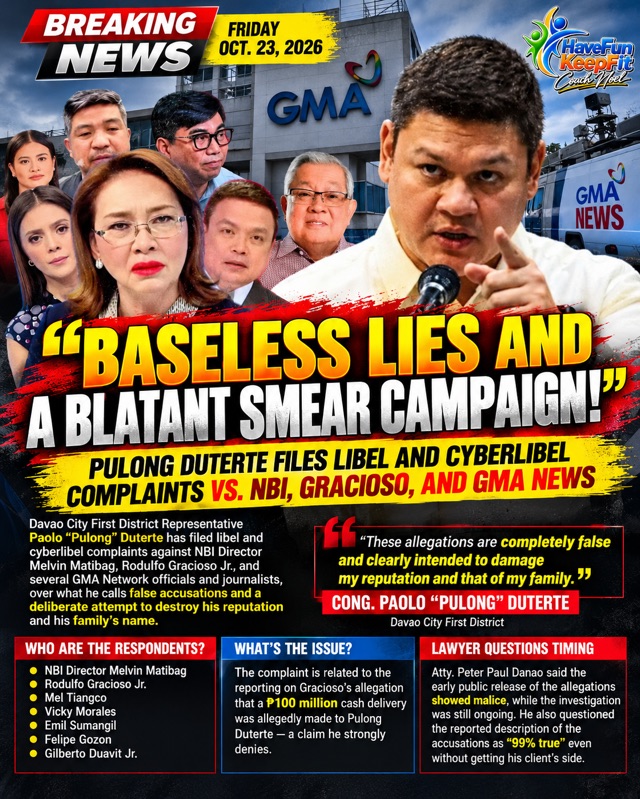
DAVAO CITY — The political and media spotlight is once again on the Duterte family as Davao City First District Representative Paolo “Pulong” Duterte takes his fight against alleged defamatory accusations to the prosecutor’s office.
In a dramatic legal move, Congressman Duterte filed libel and cyberlibel complaints against NBI Director Melvin Matibag, Rodulfo Gracioso Jr., and several prominent personalities associated with GMA Network.
His message was unmistakable: He will not remain silent while his name and his family’s reputation are being challenged by allegations he insists are false.
THE LEGAL SHOWDOWN BEGINS
On Friday, October 23, 2026, Duterte personally went to the Davao City Prosecutor’s Office to file his complaints.
According to the congressman, the legal action is intended to defend himself and his family against what he describes as fabricated allegations and deliberate attacks on their reputation.
Among the personalities reportedly named as respondents are:
- NBI Director Melvin Matibag
- Rodulfo Gracioso Jr.
- Veteran broadcaster Mel Tiangco
- News anchor Vicky Morales
- Journalist Emil Sumangil
- GMA Network executive Felipe Gozon
- GMA Network executive Gilberto Duavit Jr.
The filing represents a significant confrontation involving a prominent political family, government officials, and major media personalities.
THE ₱100-MILLION CONTROVERSY: WHAT REALLY HAPPENED?
At the center of the dispute is an explosive allegation attributed to Rodulfo Gracioso Jr., involving an alleged ₱100 million cash delivery to Congressman Paolo Duterte.
The congressman has categorically denied the accusation.
What began as a controversial allegation has now developed into a legal dispute involving questions of evidence, journalistic responsibility, and the protection of personal reputation.
But the biggest question remains:
Where is the evidence, and can the allegation withstand legal scrutiny?
The accusation remains disputed, and no conclusion about its truth should be drawn simply from its publication or from Duterte’s decision to file complaints.
“99% TRUE”? DUTERTE’S LAWYER QUESTIONS THE CLAIM
Adding another layer to the controversy, Duterte’s legal counsel, Atty. Peter Paul Danao, questioned the reported early public disclosure of the accusations while the investigation was still ongoing.
Danao alleged that the timing of the disclosure suggested malice.
He also challenged the reported description of the allegations as “99% true,” particularly because, according to Duterte’s camp, the congressman’s side had not yet been obtained.
This raises an important question about responsible journalism:
Should serious accusations be presented with such a high degree of certainty before the investigation is completed and all parties have been given an opportunity to respond?
The issue places both press freedom and journalistic accountability under the spotlight.
PRESS FREEDOM VS. REPUTATIONAL RIGHTS
The controversy goes beyond the Duterte family.
It highlights the delicate balance between two important democratic principles: the media’s right to report matters of public interest and an individual’s right to seek legal remedies against allegedly defamatory statements.
Journalists have a responsibility to investigate and report allegations involving public officials. At the same time, serious accusations should be handled with appropriate verification, context, and fairness.
Filing a libel or cyberlibel complaint, however, does not establish that a news organization or any named respondent committed wrongdoing.
The legal process must determine whether the complaints have merit.
THE NEXT CHAPTER: ALL EYES ON THE EVIDENCE
With the complaints reportedly filed, attention now turns to how prosecutors will assess the allegations, the evidence presented, and the responses of those named.
Will Duterte’s legal action succeed? Will the allegations against him be substantiated? Or will this controversy raise even more questions about the relationship between Philippine politics and the media?
For now, one thing is clear: The dispute has moved beyond television headlines and into the legal arena.
And in that arena, claims, denials, and public opinion are no substitute for evidence.
FINAL THOUGHTS
Truth must be established through evidence—not political influence, sensational headlines, or public speculation.
Whether the controversy ultimately strengthens the case for media accountability or reinforces the importance of press freedom will depend on the facts and the outcome of the legal proceedings.
What do you think?
Is Congressman Pulong Duterte justified in pursuing legal action to defend his family’s reputation? Or could these complaints have broader implications for press freedom in the Philippines?
Share your thoughts in the comments. Let’s keep the discussion informed and respectful.
Published by: HaveFunKeepFit
Bringing you the stories, controversies, and developments shaping the Philippines.
Follow and subscribe:
Facebook: NoelGRSr
Instagram: @havefunkeepfit
YouTube: @HaveFunKeepFit
Blog: https://incaseumissed.blogspot.com
#BreakingNews #PulongDuterte #PaoloDuterte #DuterteFamily #GMANews #GMA7 #24Oras #MelvinMatibag #Libel #Cyberlibel #DavaoCity #PhilippinePolitics #PressFreedom #MediaAccountability #PhilippineNews #InCaseYouMissedPH #CoachNoel
Editorial disclaimer: This article is based on the reported statements and allegations provided. The filing details, quotations, and allegations have not been independently verified. All respondents are entitled to due process and the presumption of innocence.