Showing posts with label News. Show all posts

Thursday, October 22, 2026

BREAKING NEWS: “BASELESS LIES AND A BLATANT SMEAR CAMPAIGN!” — PULONG DUTERTE FILES LIBEL AND CYBERLIBEL COMPLAINTS AGAINST NBI DIRECTOR, GMA NEWS PERSONALITIES


October 23, 2026 | Davao City, Philippines

DAVAO CITY — The political and media spotlight is once again on the Duterte family as Davao City First District Representative Paolo “Pulong” Duterte takes his fight against alleged defamatory accusations to the prosecutor’s office.

In a dramatic legal move, Congressman Duterte filed libel and cyberlibel complaints against NBI Director Melvin Matibag, Rodulfo Gracioso Jr., and several prominent personalities associated with GMA Network.

His message was unmistakable: He will not remain silent while his name and his family’s reputation are being challenged by allegations he insists are false.

THE LEGAL SHOWDOWN BEGINS

On Friday, October 23, 2026, Duterte personally went to the Davao City Prosecutor’s Office to file his complaints.

According to the congressman, the legal action is intended to defend himself and his family against what he describes as fabricated allegations and deliberate attacks on their reputation.

Among the personalities reportedly named as respondents are:

  • NBI Director Melvin Matibag
  • Rodulfo Gracioso Jr.
  • Veteran broadcaster Mel Tiangco
  • News anchor Vicky Morales
  • Journalist Emil Sumangil
  • GMA Network executive Felipe Gozon
  • GMA Network executive Gilberto Duavit Jr.

The filing represents a significant confrontation involving a prominent political family, government officials, and major media personalities.

THE ₱100-MILLION CONTROVERSY: WHAT REALLY HAPPENED?

At the center of the dispute is an explosive allegation attributed to Rodulfo Gracioso Jr., involving an alleged ₱100 million cash delivery to Congressman Paolo Duterte.

The congressman has categorically denied the accusation.

What began as a controversial allegation has now developed into a legal dispute involving questions of evidence, journalistic responsibility, and the protection of personal reputation.

But the biggest question remains:

Where is the evidence, and can the allegation withstand legal scrutiny?

The accusation remains disputed, and no conclusion about its truth should be drawn simply from its publication or from Duterte’s decision to file complaints.

“99% TRUE”? DUTERTE’S LAWYER QUESTIONS THE CLAIM

Adding another layer to the controversy, Duterte’s legal counsel, Atty. Peter Paul Danao, questioned the reported early public disclosure of the accusations while the investigation was still ongoing.

Danao alleged that the timing of the disclosure suggested malice.

He also challenged the reported description of the allegations as “99% true,” particularly because, according to Duterte’s camp, the congressman’s side had not yet been obtained.

This raises an important question about responsible journalism:

Should serious accusations be presented with such a high degree of certainty before the investigation is completed and all parties have been given an opportunity to respond?

The issue places both press freedom and journalistic accountability under the spotlight.

PRESS FREEDOM VS. REPUTATIONAL RIGHTS

The controversy goes beyond the Duterte family.

It highlights the delicate balance between two important democratic principles: the media’s right to report matters of public interest and an individual’s right to seek legal remedies against allegedly defamatory statements.

Journalists have a responsibility to investigate and report allegations involving public officials. At the same time, serious accusations should be handled with appropriate verification, context, and fairness.

Filing a libel or cyberlibel complaint, however, does not establish that a news organization or any named respondent committed wrongdoing.

The legal process must determine whether the complaints have merit.

THE NEXT CHAPTER: ALL EYES ON THE EVIDENCE

With the complaints reportedly filed, attention now turns to how prosecutors will assess the allegations, the evidence presented, and the responses of those named.

Will Duterte’s legal action succeed? Will the allegations against him be substantiated? Or will this controversy raise even more questions about the relationship between Philippine politics and the media?

For now, one thing is clear: The dispute has moved beyond television headlines and into the legal arena.

And in that arena, claims, denials, and public opinion are no substitute for evidence.

FINAL THOUGHTS

Truth must be established through evidence—not political influence, sensational headlines, or public speculation.

Whether the controversy ultimately strengthens the case for media accountability or reinforces the importance of press freedom will depend on the facts and the outcome of the legal proceedings.

What do you think?

Is Congressman Pulong Duterte justified in pursuing legal action to defend his family’s reputation? Or could these complaints have broader implications for press freedom in the Philippines?

Share your thoughts in the comments. Let’s keep the discussion informed and respectful.


Published by: HaveFunKeepFit 

Bringing you the stories, controversies, and developments shaping the Philippines.

Follow and subscribe:

Facebook: NoelGRSr
Instagram: @havefunkeepfit
YouTube: @HaveFunKeepFit
Blog: https://incaseumissed.blogspot.com

#BreakingNews #PulongDuterte #PaoloDuterte #DuterteFamily #GMANews #GMA7 #24Oras #MelvinMatibag #Libel #Cyberlibel #DavaoCity #PhilippinePolitics #PressFreedom #MediaAccountability #PhilippineNews #InCaseYouMissedPH #CoachNoel

Editorial disclaimer: This article is based on the reported statements and allegations provided. The filing details, quotations, and allegations have not been independently verified. All respondents are entitled to due process and the presumption of innocence.


Saturday, October 17, 2026

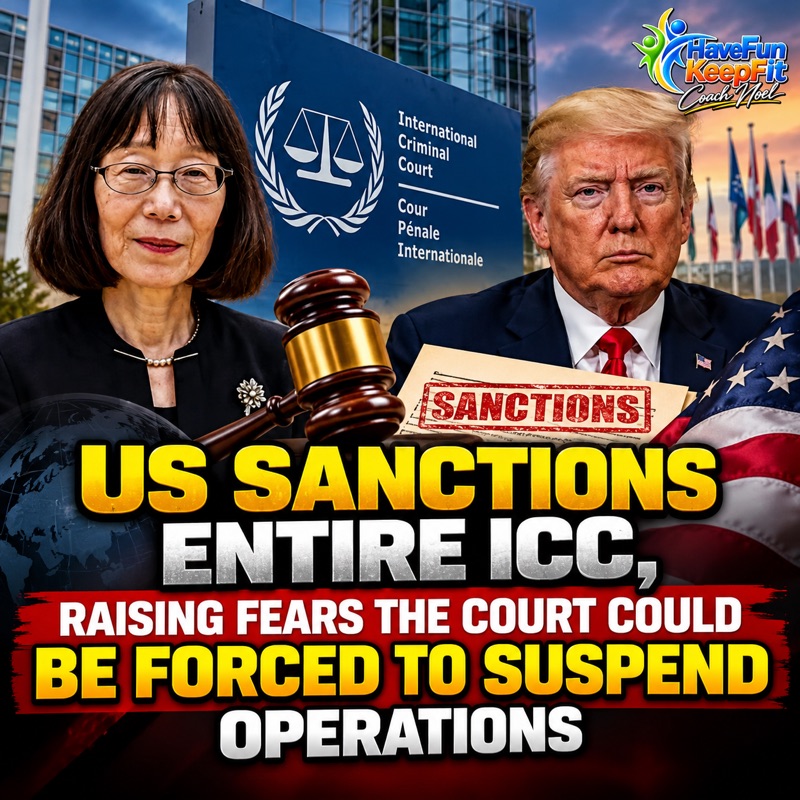
ICC UNDER PRESSURE: TRUMP ADMINISTRATION ESCALATES SANCTIONS AS EIGHT NATIONS DEFEND THE COURT


The International Criminal Court (ICC) is facing mounting pressure from Washington, raising serious questions about its independence, operations, and future.

Established in 2002 under the Rome Statute, the ICC was created to prosecute individuals accused of genocide, war crimes, and crimes against humanity. Now, the court finds itself at the center of an escalating international confrontation.

The Trump administration has repeatedly accused the ICC of unfairly targeting the United States and Israel. What began as sanctions against individual judges has reportedly escalated into measures targeting the institution itself.

According to the reported developments, on October 9, the US administration placed the ICC on the Treasury Department’s Office of Foreign Assets Control (OFAC) sanctions blacklist.

The reported restrictions could threaten the court’s access to American-linked financial systems, cloud infrastructure, including Amazon Web Services, and healthcare coverage for its personnel.

A 180-DAY COUNTDOWN: COULD THE ICC FACE OPERATIONAL PARALYSIS?

With a reported 180-day grace period before full enforcement, legal observers have warned that the restrictions could seriously disrupt the court’s operations.

The consequences could extend beyond financial transactions, potentially affecting investigations, evidence management, communications, and administrative services.

However, ICC President Judge Tomoko Akane of Japan has maintained that the court will not abandon its judicial responsibilities because of political pressure. The institution has reportedly begun exploring alternatives to US-linked services.

EIGHT NATIONS PUSH BACK AGAINST WASHINGTON

On October 10, Japan reportedly joined Canada, Denmark, France, Germany, Italy, the Netherlands, and the United Kingdom in opposing the sanctions and reaffirming their commitment to the ICC’s independence.

Their position underscores a growing diplomatic dispute over international justice, national sovereignty, and the limits of political influence over international courts.

THE BIG QUESTION: CAN INTERNATIONAL JUSTICE REMAIN INDEPENDENT WHEN GLOBAL POWERS APPLY ECONOMIC PRESSURE?

Supporters of the ICC argue that judicial institutions must be protected from political intimidation. Critics, meanwhile, question the court’s jurisdiction, accountability, and treatment of countries that have not accepted its authority.

The controversy raises a fundamental question:

Should an international court be allowed to investigate powerful nations without interference, or should national sovereignty take precedence?

As tensions intensify, the world is watching how the ICC responds to one of the most consequential challenges to its authority.

Editor’s note: The specific October 9–10 developments, the institutional blacklist designation, and the reported operational consequences require independent verification before publication.

#ICC #InternationalCriminalCourt #DonaldTrump #TomokoAkane #InternationalJustice #RomeStatute #USSanctions #WorldNews #GlobalPolitics #InCaseYouMissedPH


Wednesday, September 30, 2026

𝗛𝗨𝗪𝗔𝗚 𝗜𝗗𝗔𝗠𝗔𝗬 𝗔𝗡𝗚 𝗞𝗢𝗥𝗧𝗘 𝗦𝗨𝗣𝗥𝗘𝗠𝗔 𝗦𝗔 𝗠𝗚𝗔 𝗔𝗟𝗜𝗧𝗔𝗡𝗚 𝗣𝗔𝗠𝗣𝗨𝗟𝗜𝗧𝗜𝗞𝗔

​

Justice Noel Tijam tungkol sa kahulugan ng “All Members of the Senate,” pakikialam ng hudikatura, at pagprotekta sa kapwa senador

Nanawagan si retired Supreme Court Justice Noel Gimenez Tijam sa mga senator-judge na huwag nang paulit-ulit na dalhin sa Korte Suprema ang usapin tungkol sa interpretasyon ng katagang “All Members of the Senate” sa mga impeachment proceeding.

Ayon sa kanya, libo-libong mahahalagang kaso na ang kailangang resolbahin ng Korte Suprema sa loob ng mga itinakdang panahon. Sa halip na madagdagan pa ng mga usaping maaaring resolbahin batay sa malinaw na probisyon ng Konstitusyon, sinabi niyang dapat igalang ang oras at tungkulin ng pinakamataas na hukuman.

𝗔𝗡𝗚 “𝗔𝗟𝗟 𝗠𝗘𝗠𝗕𝗘𝗥𝗦 𝗢𝗙 𝗧𝗛𝗘 𝗦𝗘𝗡𝗔𝗧𝗘” 𝗔𝗬 𝗧𝗨𝗠𝗨𝗧𝗨𝗞𝗢𝗬 𝗦𝗔 𝗟𝗔𝗛𝗔𝗧 𝗡𝗚 𝟮𝟰 𝗡𝗔 𝗦𝗘𝗡𝗔𝗗𝗢𝗥

Para kay Justice Tijam, malinaw at walang kalabuan ang nasabing probisyon. Ang “all members of the Senate,” ayon sa kanyang interpretasyon, ay tumutukoy sa lahat ng 24 na senador.

Iginiit niyang naaayon ito sa kanyang pagbasa sa mga rekord at journal ng Constitutional Commission at sa probisyong kalaunan ay pinagtibay ng sambayanang Pilipino sa pamamagitan ng plebisito.

Dahil dito, para sa kanya, hindi na kinakailangang paliitin o baguhin pa ang kahulugan ng naturang probisyon.

𝗔𝗡𝗚 𝗞𝗢𝗥𝗧𝗘 𝗦𝗨𝗣𝗥𝗘𝗠𝗔 𝗔𝗬 𝗛𝗜𝗡𝗗𝗜 𝗗𝗔𝗣𝗔𝗧 𝗚𝗔𝗪𝗜𝗡𝗚 𝗧𝗔𝗚𝗔𝗣𝗔𝗠𝗔𝗚𝗜𝗧𝗔𝗡 𝗦𝗔 𝗔𝗟𝗜𝗧𝗔𝗡𝗚 𝗣𝗔𝗠𝗣𝗨𝗟𝗜𝗧𝗜𝗞𝗔

Pinaalalahanan din ni Justice Tijam ang mga senator-judge na ang pangunahing tungkulin ng Korte Suprema ay resolbahin ang mga usaping legal na nararapat dinggin ng hudikatura.

Sa kanyang pananaw, hindi dapat masayang ang oras ng Korte sa mga kontrobersiyang nagmumula lamang sa tunggalian at bangayang pampulitika.

Direkta ang kanyang panawagan: huwag nang dagdagan ang pasanin ng Korte Suprema at huwag nang palalain ang pagkadismaya ng sambayanang Pilipino.

𝗣𝗥𝗢𝗧𝗘𝗞𝗧𝗔𝗛𝗔𝗡 𝗔𝗡𝗚 𝗦𝗘𝗡𝗔𝗗𝗢 𝗔𝗧 𝗔𝗡𝗚 𝗠𝗚𝗔 𝗞𝗔𝗣𝗪𝗔 𝗦𝗘𝗡𝗔𝗗𝗢𝗥

Nanawagan din si Justice Tijam sa mga senator-judge na pangalagaan ang Senado bilang isang institusyon at igalang ang karapatan ng kanilang mga kapwa senador.

Ayon sa kanya, hindi dapat ituring na kalaban ang mga kapwa senador o basta alisin ang kanilang partisipasyon sa proseso.

Binigyang-diin din niya ang karapatan ng mga botanteng naghalal sa kanila. Para sa kanya, ang hindi pagpapalahok sa isang halal na senador ay maaari ring makaapekto sa representasyon ng mga mamamayang bumoto sa senador na iyon.

𝗕𝗔𝗞𝗜𝗧 𝗞𝗔𝗜𝗟𝗔𝗡𝗚𝗔𝗡𝗚 𝗔𝗕𝗔𝗟𝗔𝗛𝗜𝗡 𝗣𝗔 𝗔𝗡𝗚 𝗞𝗢𝗥𝗧𝗘 𝗦𝗨𝗣𝗥𝗘𝗠𝗔?

Kinuwestiyon ni Justice Tijam kung bakit kailangan pang hingin ang interpretasyon ng Korte Suprema sa mga salitang para sa kanya ay malinaw na.

Binanggit niya na maaaring tingnan ang mga karaniwang legal at English reference gaya ng Oxford English Dictionary, Black’s Law Dictionary, Merriam-Webster Dictionary at Roget’s Thesaurus, kasama ang mga journal ng Constitutional Commission, upang maunawaan ang kahulugan ng probisyon.

Sa huli, nanawagan siya sa mga senator-judge na pangalagaan ang Senado bilang institusyon, igalang ang kanilang mga kapwa senador, at huwag nang gawing bahagi ang Korte Suprema ng hindi kinakailangang bangayang pampulitika.

Para kay Justice Tijam, malinaw na ang nakasaad sa Konstitusyon. Ang hamon ngayon ay kung paano ito ipatutupad nang naaayon sa batas, proseso, at pananagutan sa sambayanang Pilipino.

Sa halip na personal na insulto laban sa mga senador, mas mahalagang suriin ng publiko ang kanilang mga boto, argumento, legal na batayan, at mga desisyong ginagawa nila sa prosesong ito.

𝗞𝗘𝗘𝗣 𝗧𝗛𝗘 𝗦𝗨𝗣𝗥𝗘𝗠𝗘 𝗖𝗢𝗨𝗥𝗧 𝗢𝗨𝗧 𝗢𝗙 𝗣𝗢𝗟𝗜𝗧𝗜𝗖𝗔𝗟 𝗗𝗜𝗦𝗣𝗨𝗧𝗘𝗦

Justice Noel Tijam on the meaning of “All Members of the Senate,” judicial intervention, and protecting fellow senators

Retired Supreme Court Justice Noel Gimenez Tijam called on senator-judges to refrain from repeatedly bringing before the Supreme Court disputes concerning the interpretation of the phrase “All Members of the Senate” in impeachment proceedings.

According to him, the Supreme Court already has thousands of important cases that must be resolved within prescribed periods. Rather than adding matters that, in his view, can be resolved through the clear provisions of the Constitution, he said the time and responsibilities of the country’s highest court should be respected.

𝗔𝗟𝗟 “𝗠𝗘𝗠𝗕𝗘𝗥𝗦 𝗢𝗙 𝗧𝗛𝗘 𝗦𝗘𝗡𝗔𝗧𝗘” 𝗥𝗘𝗙𝗘𝗥𝗦 𝗧𝗢 𝗔𝗟𝗟 𝟮𝟰 𝗦𝗘𝗡𝗔𝗧𝗢𝗥𝗦

For Justice Tijam, the provision is clear and unambiguous. According to his interpretation, “all members of the Senate” refers to all 24 senators.

He maintained that this interpretation is consistent with his reading of the records and journals of the Constitutional Commission and with the constitutional provision that was subsequently ratified by the Filipino people through a plebiscite.

For this reason, he believes there is no need to narrow or alter the meaning of the provision.

𝗧𝗛𝗘 𝗦𝗨𝗣𝗥𝗘𝗠𝗘 𝗖𝗢𝗨𝗥𝗧 𝗦𝗛𝗢𝗨𝗟𝗗 𝗡𝗢𝗧 𝗕𝗘 𝗠𝗔𝗗𝗘 𝗔𝗡 𝗔𝗥𝗕𝗜𝗧𝗘𝗥 𝗢𝗙 𝗣𝗢𝗟𝗜𝗧𝗜𝗖𝗔𝗟 𝗗𝗜𝗦𝗣𝗨𝗧𝗘𝗦

Justice Tijam also reminded the senator-judges that the Supreme Court’s principal responsibility is to resolve legal controversies that properly fall within the jurisdiction of the judiciary.

In his view, the Court’s time should not be unnecessarily consumed by controversies arising from political conflict and rivalry.

His appeal was direct: do not add unnecessarily to the Supreme Court’s burden or further contribute to the frustration of the Filipino people.

𝗣𝗥𝗢𝗧𝗘𝗖𝗧 𝗧𝗛𝗘 𝗦𝗘𝗡𝗔𝗧𝗘 𝗔𝗡𝗗 𝗬𝗢𝗨𝗥 𝗙𝗘𝗟𝗟𝗢𝗪 𝗦𝗘𝗡𝗔𝗧𝗢𝗥𝗦

Justice Tijam also called on the senator-judges to protect the Senate as an institution and respect the rights of their fellow senators.

According to him, fellow senators should not be treated as enemies or simply excluded from participating in the proceedings.

He also emphasized the rights of the voters who elected them. In his view, excluding an elected senator from participating may also affect the representation of the citizens who voted for that senator.

𝗪𝗛𝗬 𝗕𝗨𝗥𝗗𝗘𝗡 𝗧𝗛𝗘 𝗦𝗨𝗣𝗥𝗘𝗠𝗘 𝗖𝗢𝗨𝗥𝗧?

Justice Tijam questioned why the Supreme Court’s interpretation should still be sought for language that he considers clear.

He noted that standard legal and English references—such as the Oxford English Dictionary, Black’s Law Dictionary, Merriam-Webster Dictionary, and Roget’s Thesaurus—could be consulted alongside the journals of the Constitutional Commission in understanding the meaning of the provision.

In closing, he called on the senator-judges to protect the Senate as an institution, respect their fellow senators, and avoid unnecessarily drawing the Supreme Court into political disputes.

For Justice Tijam, the language of the Constitution is already clear. The issue now is how it should be implemented in accordance with the law, proper procedure, and accountability to the Filipino people.

Rather than resorting to personal attacks against senators, the public can examine their votes, arguments, legal grounds, and decisions throughout the proceedings.

#Justice #Constitution #ConstitutionalLaw #RuleOfLaw #Philippines #Senate #SupremeCourt #StandForTruth


Wednesday, September 23, 2026

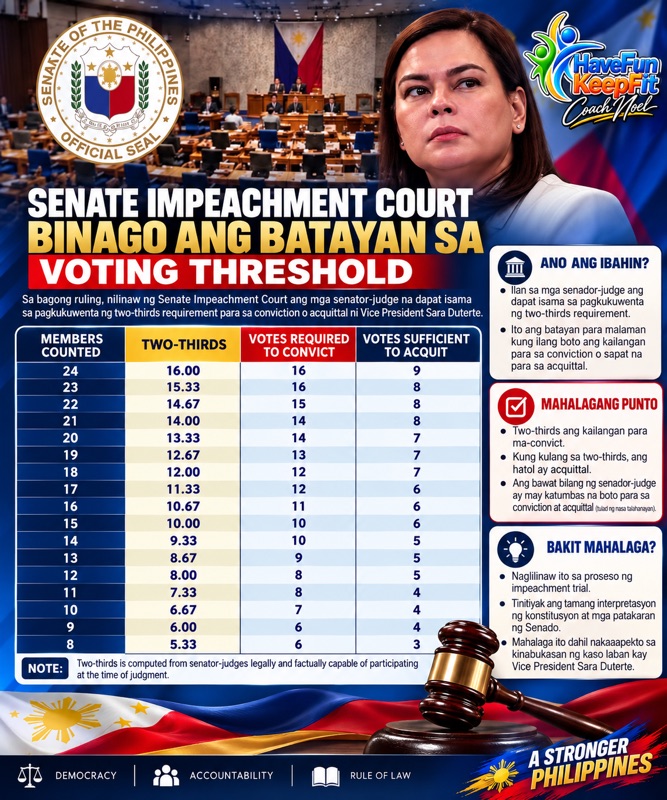
Senate Impeachment Court Voting System

​

SENATE IMPEACHMENT COURT CHANGES THE BASIS FOR THE VOTING THRESHOLD

Sixteen votes are no longer automatically required for conviction

The Senate Impeachment Court made a significant change regarding the voting threshold in the impeachment trial of Vice President Sara Duterte.

Under the new ruling, the constitutional requirement of a two-thirds vote for conviction remains unchanged. What has changed is how the number of senator-judges used to calculate that two-thirds requirement will be determined.

What is the new basis?

Under the ruling, the two-thirds requirement will be calculated based on the number of senators who are legally and factually capable of participating in the impeachment proceedings at the time of the final vote.

This means that certain senator-judges may potentially be excluded from the calculation if they are detained or suspended, legally restrained from performing their duties, cannot be located by authorities, are physically or medically incapable of participating, are beyond the coercive processes of the Senate, or are in other comparable circumstances.

However, exclusion is not automatic. The Senate Impeachment Court must first determine, based on sufficient evidence, whether a senator falls under any of these circumstances.

What does this mean for the voting threshold?

It means that 16 votes may no longer always be the fixed number required for conviction.

The actual number needed would depend on how many senator-judges are legally and factually capable of participating when the final judgment is made.

For example, if all 24 senators are counted, two-thirds is 16 votes. If fewer senators are legally counted as capable of participating, the number required for conviction could also change.

Because senators cannot cast fractional votes, any two-thirds calculation that produces a fraction would effectively require the next whole vote to reach the constitutional threshold.

Why is this important?

The issue goes beyond whether the required number is 16, 15, or 14 votes. The central constitutional question is how the phrase “two-thirds of all the Members of the Senate” should be interpreted when one or more senators are legally or factually unable to participate as senator-judges.

Supporters of the new interpretation argue that the denominator should reflect senators who can legally and actually participate in the judgment.

Other senator-judges have taken a different position, arguing that the constitutional phrase “all the Members of the Senate” refers to the Senate’s full membership and therefore should not be reduced simply because some members cannot participate.

Ultimately, the exact voting threshold would depend on the composition and legal status of the senator-judges at the time the Senate Impeachment Court renders its final judgment.


SENATE IMPEACHMENT COURT BINAGO ANG BATAYAN SA VOTING THRESHOLD

Hindi na awtomatikong 16 boto ang kailangan para sa conviction

Isang mahalagang pagbabago ang ginawa ng Senate Impeachment Court noong September 23, 2026 kaugnay ng impeachment trial ni Vice President Sara Duterte. Sa botong 13–1, habang anim na senator-judges ang hindi lumahok, binaligtad ng korte ang naunang ruling na nagtatakda ng fixed 16 votes para sa conviction batay sa kabuuang 24 miyembro ng Senado. 

Ano ang bagong batayan?

Sa bagong controlling ruling, nananatili ang constitutional requirement na two-thirds vote para sa conviction. Ang nabago ay kung sino ang isasama sa denominator o bilang ng mga senador na pagbabatayan sa pagkukuwenta ng two-thirds.

Ang bibilangin ay ang mga miyembro ng Senado na, sa oras ng final vote, ay “legally and factually capable of participating” sa impeachment proceedings. 

Maaaring hindi isama sa denominator ang senator-judges na detained at/o suspended o legally restrained sa kanilang tungkulin; hinahanap ng mga awtoridad at hindi matukoy ang kinaroroonan; may physical o medical incapacity; nasa labas ng coercive processes ng Senado; o nasa iba pang katulad na sitwasyon. Gayunman, hindi awtomatiko ang exclusion—kailangang matukoy muna ng impeachment court, batay sa sapat na ebidensya, kung pasok ang isang senador sa mga naturang kategorya. 

Ano ang epekto nito?

Ibig sabihin, wala nang permanenteng fixed number na 16 votes sa ilalim ng bagong ruling. Ang eksaktong bilang na kailangan para sa conviction ay nakadepende sa bilang ng senator-judges na legal at aktuwal na maaaring lumahok kapag ibinaba na ang final judgment. Kapag may fractional result sa two-thirds computation, kailangan itong umabot sa susunod na buong boto dahil walang fractional vote ang isang senador. 

Mahalagang linawin na hindi nito binago ang two-thirds constitutional standard mismo. Ayon kina Senate President Sherwin Gatchalian at Senator-Judge Risa Hontiveros, ang binago ay ang voting base o denominator kapag may mga senador na hindi maaaring lumahok. 

May mga senator-judges naman na tumutol sa interpretasyong ito. Ang kanilang posisyon ay ang constitutional phrase na “two-thirds of all the Members of the Senate” ay dapat tumukoy sa buong membership ng Senado at hindi dapat mabawasan dahil lamang may mga miyembrong hindi nakalalahok. 

Bakit mahalaga ang ruling?

Ang usapin ay hindi lamang tungkol sa numerong 16, 15, o 14. Ang sentrong legal na tanong ay kung paano dapat unawain ang salitang “all” sa constitutional requirement kapag may mga senador na legal o faktuwal na hindi maaaring gumanap bilang senator-judges.

Sa huli, ang magiging aktuwal na voting threshold ay nakadepende sa komposisyon at legal na kalagayan ng mga senator-judges sa mismong panahon ng final judgment. 

#SenatePH #SenateImpeachmentCourt #SaraDuterte #ImpeachmentTrial #VotingThreshold #Philippines #RuleOfLaw #PhilippinePolitics