
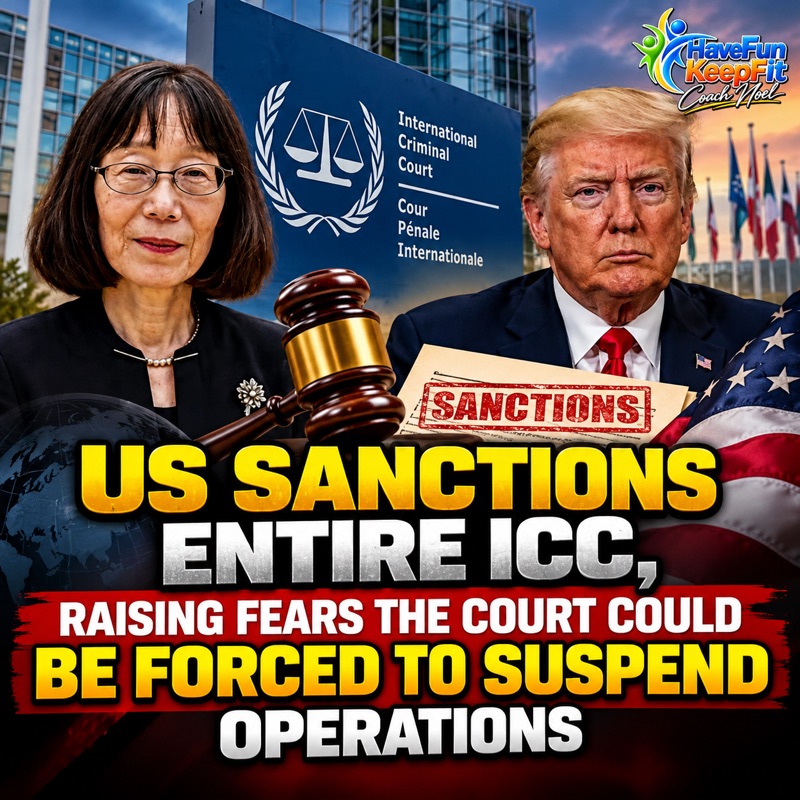
The International Criminal Court (ICC) is facing mounting pressure from Washington, raising serious questions about its independence, operations, and future.
Established in 2002 under the Rome Statute, the ICC was created to prosecute individuals accused of genocide, war crimes, and crimes against humanity. Now, the court finds itself at the center of an escalating international confrontation.
The Trump administration has repeatedly accused the ICC of unfairly targeting the United States and Israel. What began as sanctions against individual judges has reportedly escalated into measures targeting the institution itself.
According to the reported developments, on October 9, the US administration placed the ICC on the Treasury Department’s Office of Foreign Assets Control (OFAC) sanctions blacklist.
The reported restrictions could threaten the court’s access to American-linked financial systems, cloud infrastructure, including Amazon Web Services, and healthcare coverage for its personnel.
A 180-DAY COUNTDOWN: COULD THE ICC FACE OPERATIONAL PARALYSIS?
With a reported 180-day grace period before full enforcement, legal observers have warned that the restrictions could seriously disrupt the court’s operations.
The consequences could extend beyond financial transactions, potentially affecting investigations, evidence management, communications, and administrative services.
However, ICC President Judge Tomoko Akane of Japan has maintained that the court will not abandon its judicial responsibilities because of political pressure. The institution has reportedly begun exploring alternatives to US-linked services.
EIGHT NATIONS PUSH BACK AGAINST WASHINGTON
On October 10, Japan reportedly joined Canada, Denmark, France, Germany, Italy, the Netherlands, and the United Kingdom in opposing the sanctions and reaffirming their commitment to the ICC’s independence.
Their position underscores a growing diplomatic dispute over international justice, national sovereignty, and the limits of political influence over international courts.
THE BIG QUESTION: CAN INTERNATIONAL JUSTICE REMAIN INDEPENDENT WHEN GLOBAL POWERS APPLY ECONOMIC PRESSURE?
Supporters of the ICC argue that judicial institutions must be protected from political intimidation. Critics, meanwhile, question the court’s jurisdiction, accountability, and treatment of countries that have not accepted its authority.
The controversy raises a fundamental question:
Should an international court be allowed to investigate powerful nations without interference, or should national sovereignty take precedence?
As tensions intensify, the world is watching how the ICC responds to one of the most consequential challenges to its authority.
Editor’s note: The specific October 9–10 developments, the institutional blacklist designation, and the reported operational consequences require independent verification before publication.
#ICC #InternationalCriminalCourt #DonaldTrump #TomokoAkane #InternationalJustice #RomeStatute #USSanctions #WorldNews #GlobalPolitics #InCaseYouMissedPH

No comments:
Post a Comment