Showing posts with label Workout Routine. Show all posts

Saturday, October 22, 2022

The Time Under Tension For Ideal Ranges

The Time Under Tension For Ideal Ranges

Varying the tempo on an exercise to manipulate the time under tension (TUT) is an excellent tool for building muscle and busting plateaus. It is also a great trick for making your in-home workouts more challenging if you are limited to a few lightweight dumbbells.

The Time Under Tension For Ideal Ranges

TUT is commonly used in strength training and bodybuilding as a way of calculating the total amount of work you place on a muscle. It refers to the total time a muscle is under strain during each set.

For example, a typical set of 8 reps on the barbell curl for the average lifter may take about 16 seconds. 1 second to lift the weight, 1 second to lower weight. Most people just move the weight as fast as possible.

However, various studies have shown that slowing the tempo, particularly on the eccentric portion of a movement (the lowering portion when your muscle is slowly elongating) provides a stimulus to the muscle that can trigger adaptations leading to higher rates of protein synthesis and muscle development.

In other words, by putting a muscle under longer bouts of strain, you can cause extensive muscle breakdown leading to greater muscle growth.

Take the same 8 reps on the barbell curl and slow down the eccentric portion (lowering the barbell) to 3 seconds, and now your total time under tension goes from 16 to 42 seconds.

The number of reps and the amount of weight have not changed, yet in the second example, you spent more than double the amount of time under tension. That is the basis of TUT training.

The Time Under Tension For Ideal Ranges

Focus on sets that last for a certain amount of time, based on your training goals while still maintaining good form and full range of motion. You will probably find out that as you slow down the movement, you will need to go lighter in weight or use drop sets to complete the last few reps without stopping.

 Sharing in caring...

Monday, August 1, 2022

Workout For Abs You Need To Know

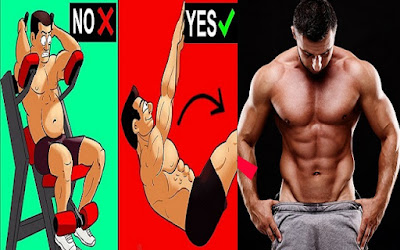
The Right And Wrong Workout For Six Pack Abs!

Workout For Abs You Need To Know

Young boys and men are enthralled by the idea of abs training. If their partner has great abs, women love to show them off. While there is a wealth of knowledge and many gym instructors accessible to aid you in obtaining excellent abs, inaccurate information frequently leads to misunderstanding. 

As a result, incorrect training strategies are used. Although you may be on the correct track to abs training, you may be making some mistakes that are preventing you from reaching your objectives. Here are most typical blunders you should avoid if you want to strengthen your abs. Correct these flaws to acquire toned abs:
 
Failure to perform compound exercises

While isolation exercises target your major muscle groups and help you tone up the muscles you want, you should also incorporate compound exercises into your workout routine. Squats, presses, and deadlifts are examples of compound exercises that engage your core and work more than one muscle group. To achieve effective results, make sure to include compound exercises in your training.

Starting with ab exercises

Working out on a daily basis is not a smart idea since, like other muscles, your abs require rest. Allow a day for your ab muscles to recuperate. If you can do crunches every day without any muscular pain, you might probably try a more difficult activity. While working on your abs, make sure to take a one-day break.

Workout For Abs You Need To Know

 You Only Do Crunches

Crunches aren't the only technique to get your abs in shape. If you solely concentrate on crunches, you will not see any changes in your body over time. Other ab exercises that target the abs include ab wheel rollouts, barbell Russian twists, planks, and other similar workouts.

Not Putting Too Much Emphasis On Form

When performing abdominal workouts, make sure you follow the steps in the exact order. Even if you do a workout for a long time, it will be in vain if you do not perform the exercise correctly. Ensure that your abs are engaged during each rep.

Workout For Abs You Need To Know

Forgetting to Take Care of Your Lower Back

While you're working on your abs, make sure you're also working on your lower back. Because your core encompasses your back as well as your front, lower back exercises such as hyperextensions and deficit deadlifts are essential.

Failure to work from various angles

Because your core muscles run in all directions, you should make sure that your workout involves a variety of movements. Advanced exercises, such as windshield wipers, engage the entire core, including the obliques and lower back; however, if you find it too challenging, attempt other crunches to work on different angles.


Sharing is caring...

Saturday, January 22, 2022

Top Workout Routines for Teens


Though most teens believe that the longer they workout in the gym the more bodybuilding results they will get, in reality, bodybuilding workouts should not last more than 1 hour tops with 45 minutes being an even more optimal length. The reason for this is because after 45-60 minutes of intense training, testosterone levels begin to fall and cortisol levels begin to rise. Not a good scenario for those of us who would like to build muscle and lose some body fat. Therefore, the mission is to get in and out of the gym; so that means no socializing during workout time.

Top Workout Routines for Teens


Thus, in order to maximize your results, you need to be able to hit each muscle efficiently during the allotted time, with perfect form and the right intensity. The bodybuilding workouts shown below will get you started on the right track.​​

Sample Bodybuilding Workout Routines for Teens

The bodybuilding workouts shown below will get you started on the right foot once you have gone through the beginning and intermediate phases of bodybuilding.

Workout Notes
 
Workout Frequency: You can do this workout 3 days on followed by one day off. If you need more time to recover from your workouts, you can train 2 days on and 1 day off picking up the next workout in the sequence on the following training day. Hardgainers do best by training Monday, Tuesday, Thursday, and Friday with weekends off.

Top Workout Routines for Teens


Use Perfect Form: Make sure that you use perfect form on all exercises for maximum stimulation and injury prevention. Never sacrifice form in order to add more weight.
Keep It Fast Paced: Rest 60 seconds in between sets.​​​

Workout (A): Chest/Shoulders/Triceps

Chest
Incline Bench Press (alternate with Incline Dumbbell Press every other workout) 4 sets of 12, 10, 8, 8 reps
Flat Dumbbell Press (Chest Dips every other workout) 3 sets of 10-12 reps
Incline Flyes 3 sets of 12-15 reps (alternate with Flat Flyes every other workout)

Shoulders
Dumbbell Shoulder Press (alternate with Upright Rows every other workout) 3 sets of 12, 10, 8 reps
Lateral Raises (alternate with Military Press every other workout) 3 sets of 10-12 reps
Bent Over Laterals (alternate with Rear Delt Machine) 3 sets of 12-15 reps

Triceps
Triceps Dips on Parallel Bars (alternate with Close Grip Bench Press every other workout) 4 sets of 12, 10, 8, 8 reps
Straight Bar Triceps Pushdowns (alternate with Overhead Dumbbell Triceps Extensions every other workout) 4 sets of 10-12 reps​

Workout (B): Thighs/Hamstrings/Abs

Quads
Squats (alternate with Wide Stance Squats) 4 sets of 12, 10, 8, 8 reps
Leg Press (alternate with Hack Squats) 3 sets of 10-12 reps
Leg Extensions (alternate with One Legged Leg Extensions) 3 sets of 12-15 reps

Hamstrings
Standing Leg Curls (alternate with Lying Leg Curls w/ Toes Out) 3 sets of 8-10 reps
Lying Leg Curls w/ Toes In (alternate with Seated Leg Curls) 3 sets of 8-10 reps
Lunges (alternate with Step Ups) 3 sets of 12-15 reps
(Note: Press with your heels on lunges and step ups)

Abs
Hanging Leg Raises (alternate with Knee-Ins) 4 sets of 10-15 reps
Crunches on Exercise Ball (alternate with Bicycle Crunches) 4 sets of 10-15 reps​
Workout (C): Back/Biceps/Calves

Back
Wide Grip Pull-ups to Front (alternate with Wide Grip Pull-ups to Back) 4 sets of 8-12 reps
(Note: Use Pull-up assist machine if unable to do without help)
Reverse Close Grip Chin-ups (alternate with T-Bar Rows) 3 sets of 10-12 reps
(Note: Use Pull-up assist machine if unable to do without help)
Low Pulley Rows (alternate with One Arm Rows every other workout) 3 sets of 12-15 reps

Biceps
Concentration Curls (alternate with Preacher Curls) 3 sets of 8-10 reps
Incline Curls (alternate with Incline Hammer Curls) 3 sets of 10-12 reps
Hammer Curls (alternate with High Pulley Curls) 3 sets of 12-15 reps

Calves
Standing Calf Raises (alternate with Calf Press) 4 sets of 8-10 reps
Seated Calf Raises with Toes In (alternate with Seated Calf Raises with Toes Out) 4 sets of 15-20 reps

Monday, January 3, 2022

Top 6 Boxing Basics

6 Boxing Basics That'll Make You Feel Like a Total Badass


Top 6 Boxing Basics
Share on Pinterest

Boxing may look intimidating, but it doesn’t have to feel that way. Arming yourself with a few basic moves before your first boxing class or training session will set you up for success in the ring.

“At any level, it’s always beneficial to brush up on the fundamentals,” says Tatiana Firpo, group fitness instructor at EverybodyFights.

“Plus, it’s fun! When you learn correct technique and train to understand boxing, there are endless possibilities of progress, and it’s a great feeling of accomplishment,” she says.

Before you get started, brush up on your stance and breathing technique then master the 6 basic moves below.
Top 6 Boxing Basics


Boxing stance

Start standing with feet shoulder-width apart.

If you’re right-handed, take one step back with your right foot. Left-handers, do the opposite. The lead toe should be in line with the rear heel.

Turn lead shoulder to opponent or bag. Bend knees slightly for agility.

This stagger stance helps you maintain balance. It also allows you to use your hips for power when throwing a punch.

In a real match, this stance also makes you a smaller target for your opponent, giving them less area to connect a hit. To protect your face, tuck chin and place gloves up to cheekbones.

Boxing Breath

Inhale to prepare for a punch. As you throw, exhale fast through your mouth (versus your nose) with a closed jaw. This should sound like a hiss.

In a real match, you could risk breaking the jaw if your mouth is open and you take a hit to the chin. The purpose of this sharp exhale is to engage the core and connect the punch to your body.

This breath work helps with both timing and power. Even if you’d never end up in a real fight, you’ll still look and sound like a pro.

Basic boxing moves

1. Jab

Share on Pinterest

Start in boxing stance. As fast as possible, extend front arm straight out as you step forward with front foot. Your front hand and front foot should connect simultaneously.

Pull glove back to face as fast as possible to reset. The jab, usually referred to as “1,” is your quickest punch and uses the least amount of energy.

2. Cross

Share on Pinterest

Start in a boxing stance. Step front foot forward as you rotate at the hips, pivot rear foot forward, and extend rear arm straight out. Don’t cock arm back. Also remember to keep weight evenly distributed through both legs.

Pull your fist back to face as quickly as possible to reset. The cross, usually referred to as “2” is your power punch, since you can throw your whole body into it.

3. Hook

Share on Pinterest

Start in a boxing stance. Lift your front elbow to be parallel with the floor, like you’re stirring a pot. Pivot on front foot to turn knee and roll hip over for more power. Rotate everything at the same time to connect.

Keep arm at a 90-degree bend and don’t extend through the punch. Repeat on the opposite side for rear hook. The hook — lead is “3” and rear is “4” — is a short range punch, so always keep opposite hand up to your face to guard.

4. Uppercut

Share on Pinterest

Start in boxing stance. On lead side, drop shoulder (like a side crunch) and load legs by bending at the knees slightly.

Keep your arm bent and throw a punch from the ground up as you turn your hip and pivot your foot. Don’t curl your arm. The power won’t come from biceps; it comes from the legs. Pull fist back to face as quickly as possible to reset.

Like the hook, the uppercut — lead is “5,” rear is “6” — is a short-range shot, so don’t reach for it and end up with your knuckles in the air Mortal Combat-style. Keep the opposite fist at your face for protection.

Basic defensive boxing techniques

5. Slip

Share on Pinterest

Start in boxing stance with fists up to guard. If opponent throws toward your right side, rotate from waist to left, drop left shoulder, bend knees, and crunch to left to slip outside the line of opponent’s shot.

Repeat on right side if opponent throws to left. Slipping is a defensive boxing technique and puts you in a position to counter as you rise back up to starting stance.

6. Duck

Share on Pinterest

Start in boxing stance. As opponent throws a shot (like a hook), send hips back and bend knees (like a squat), then shift your body weight from one leg to the other as you rise back up.

Like slipping, ducking is a defensive technique. Unlike slipping, you’re ducking under the shot and rising up on the other side to throw a counter.

Special thanks to Gotham Gym NYC and our model, Tatiana Firpo, for demo-ing the boxing moves.

Share...

Wednesday, September 22, 2021

Top 12 Boxing-Inspired Core Exercises for Rock-Solid Abs

You might find it surprising that boxing is one of the most complete, full-body workouts you can do. Your aerobic, anaerobic, and nervous system have to work together, and as a result, your musculature and mental sharpness, or reaction time, improves, explains Noah Neiman, cofounder and head trainer at Rumble Boxing in New York City.
 
“A common misconception most people have is that launch power for a punch comes from strong arms,” he says. “But it’s actually the ability to generate power from your legs, from the speed and power of rotation through your hips and core, and then ultimately the extension of your arms that creates a strong punch.”

Translation: Core strength is integral to generating the force necessary for boxing (whether you’re a casual kickboxer or a serious competitor). And a strong core isn’t just beneficial in the ring; it’s important outside of it too. “Poor core strength can lead to back, lower back, neck, and even knee pain,” Neiman says. So to keep you in top shape on and off the ropes, we collected 12 abs exercises borrowed from boxers that’ll help you build serious core strength.

How to use this list: Start by performing each exercise below for 30 seconds. Use the modifications or progressions listed, if applicable, to better suit your personal strength. Build up to 60 seconds each. Perform each move with no rest in between for a killer 12-minute workout or scroll down to try our 12-minute, 4-move sample workout below. You can substitute any exercise in this list for another in the workout. Grab an exercise mat to get started.

Inchworm Push-Up

Share on Pinterest

Stand with feet shoulder-width apart. Hinge at hips to bend over and touch floor with hands, then walk hands out to high plank position. Keeping elbows close to sides, bend elbows and lower chest to floor. Push back up, then walk hands back toward feet. Repeat. Make it easier: Drop to knees for the push-up then return to plank.

Sit-Up With One-Two Punch

Share on Pinterest

Lie faceup on mat, knees bent, feet flat on the floor in front of you. Keeping feet planted, engage core and use abdominal muscles to sit up while keeping hands in fists in guard in front of face. At the top, throw a right and left punch, then slowly lower back down one vertebrae at a time to return to starting position. Repeat. Make it harder: Add 16-ounce gloves or a light set of hand weights.

Walking Plank

Share on Pinterest

Start in high plank position, hands directly under shoulders, legs extended out behind you, core engaged to keep body in straight line from head to toe. Lift up right hand and lower right forearm to the floor. Do the same with left hand and forearm. Then lift right forearm and place right hand back on ground, followed by the left hand. Continue repeating. Make it harder: Place a BOSU ball underneath your forearms to challenge your stability.

V-Up

Share on Pinterest

Lie faceup on mat, legs extended straight, arms extended overhead. Keeping core engaged, sit up, lifting arms and legs simultaneously toward each other, so body forms a V shape. Slowly lower back down until arms and legs are two inches above ground. Repeat.

Plank Jack

Share on Pinterest

Start in a forearm plank, elbows directly under shoulders, core engaged so body forms a straight line from head to toe. Without moving upper body, jump feet apart, then back together. Continue jumping.Make it harder: Increase your speed.

Sprinter Crunch

Share on Pinterest

Lie faceup on mat, legs extended out in front of you, hands up in guard. Keeping core tight, sit up and twist toward left while simultaneously bringing left knee to right elbow. Lower back down to starting position. Repeat on other side. Continue alternating.

Straight Leg Scissor

Share on Pinterest

Sit on mat, legs extended straight out in front of you. Lean torso back and place fingertips on floor next to hips for support. Keeping legs straight NS core engaged, lift right leg toward ceiling. Lower, then lift left leg toward ceiling. Continue alternating. Make it harder: Add ankle weights.

Push-Up to Superman

Share on Pinterest

Start in high plank position, hands slightly wider than shoulder-width apart, body in straight line from head to toe. Bend at elbows to lower chest to floor to perform a push-up. Release hands, pull shoulder blades together, and lift chest, arms, and legs off mat. Lower down, place hands on ground, and push back up to plank position. Repeat.

Russian Twist
 
Share on Pinterest

Sit on mat with knees bent, feet on floor in front of you about hip-width apart. Engage core, lean back about 45 degrees, and bring fists up to chest with elbows out. Twist at waist to tap right elbow to the mat on right side, then left elbow to mat on left side. Continue alternating. Make it harder: Grab a medicine ball or kettlebell in the weight of your choice and hold at chest.

Shoulder Tap

Share on Pinterest

Start in high plank position, hands directly under shoulders, body in straight line from head to toe. Without shifting weight and keeping body still, lift right hand and tap left shoulder, then lift left hand and tap right shoulder. Continue alternating as fast as possible.

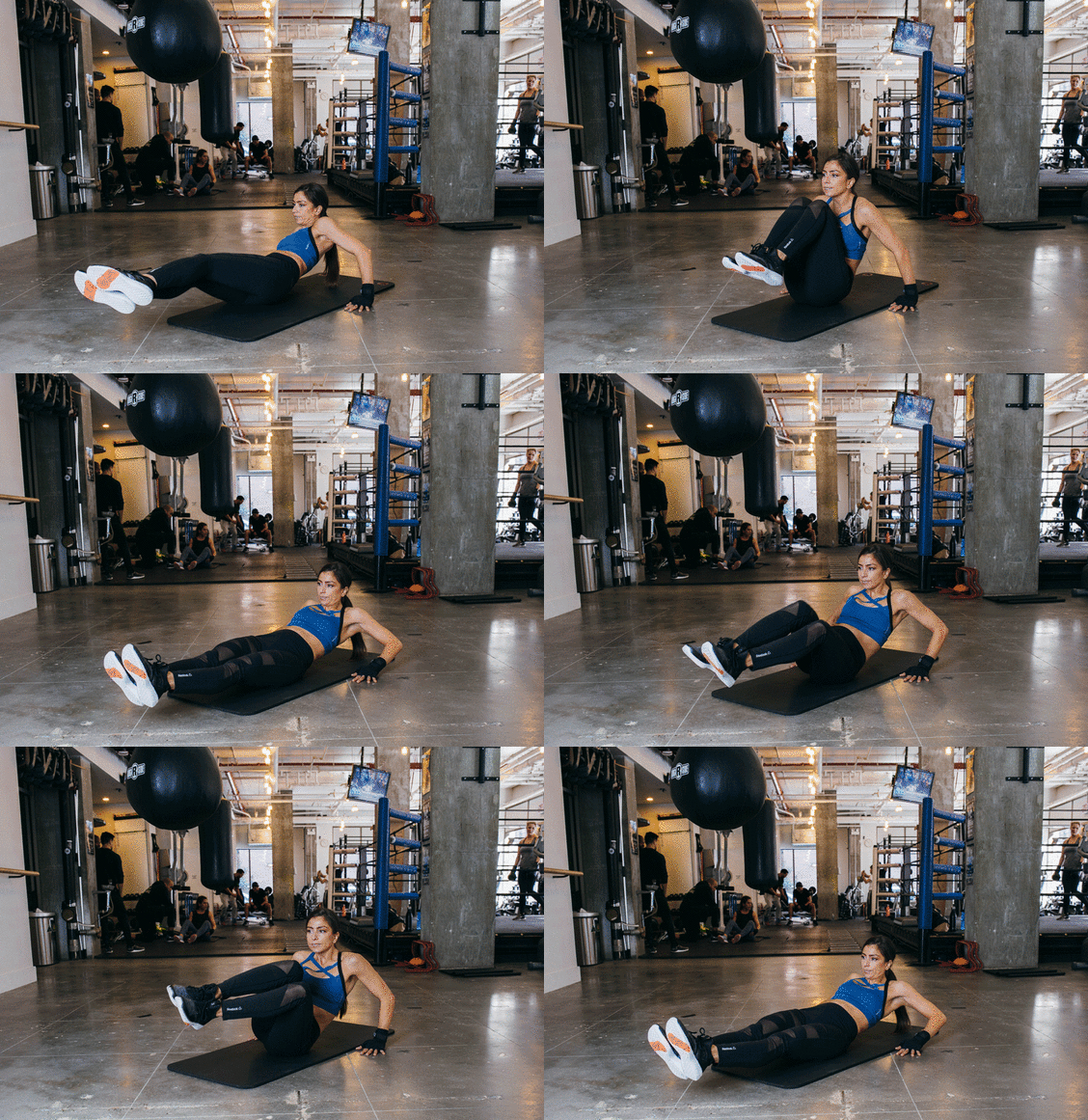
Reverse Oblique Crunch

Share on Pinterest

Start sitting on mat, legs extended out in front of you, hands on mat behind you. Lean back slightly onto fingertips for balance and lift legs two inches off floor. Keeping core tight, twist at the waist and bring bent knees toward chest, then extend back out (don’t drop legs to mat). Twist to the other side and repeat. Continue alternating.

Sit-Up to Stand Up

Share on Pinterest

EDITOR’S PICK{{displayTitle}}This is a classic Mayweather move that’ll challenge your entire body. Grab a partner (or just use the base of a couch, dresser, or heavy object to lock down your feet). Start lying faceup on mat, knees bent, feet flat on the floor in front of you with partner anchoring feet. Engage core, perform a sit-up, and continue to come all the way up to standing, reaching arms overhead. Slowly reverse the movement back down to return to starting position. Repeat. Make it harder: Add a set of dumbbells.
 
Share on Pinterest
Photography: Julia Hembree

Special thanks to Gotham Gym NYC and our model, Tatiana Firpo, Gotham group fitness manager and trainer.

Wednesday, July 14, 2021

Treatment & Exercise Of Lumbar Facet Joint Pain


Lumbar Facet joint syndrome can be a significant source of lower back pain, accounting for 15% to 45% of lower back pain

While lumbar facet joint syndrome cannot be reversed, research has shown that exercise, certain lifestyle changes, and management of back pain with conservative treatment methods, including rest, ice, heat and over-the-counter medications, can help to control symptoms and improve quality of life.

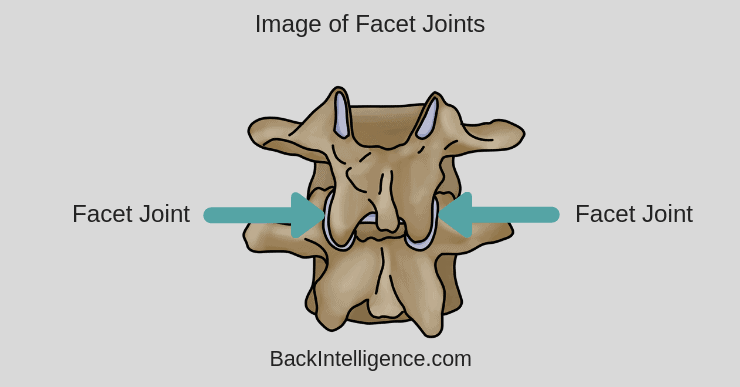
Here’s an image showing the Facet joint where the pain happens at the back of your spine:

Facet Joint Image

Symptoms of Facet Joint Pain Syndrome
-Widespread, achy back pain (affecting one/both sides of body) that radiates to one or both buttocks, sides of the groin, and thighs, and stops above the knee.-Pain may be chronic or come and go.-Pain is worse from spinal extension (leaning back) and lateral (side) flexion to the affected side (leaning to the side of the affected facet joint).-Pain and tenderness to palpation of the affected area.-Prolonged periods of inactivity and standing can worsen pain.-Pelvic and abdominal pain may be present.

Certain movements that take pressure off of the affected facet joint, such as leaning forward (flexion), or towards the healthy side, as well as changing positions can ease pain.

Causes of Lumbar Facet Joint Pain

Facet joint degenerative osteoarthritis is the most common form of Facet joint pain. It is the result of degenerative changes to the joints that are located between the bones of the spine, known as the facet joints. This condition is often (not always) tied to the degenerative changes of the spine’s intervertebral disks.

The cartilage inside the facet joints can break down, leading to joint space narrowing and inflammation, which can trigger pain signals in the surrounding nerve endings; the muscles in the area then stiffen and spasm, leading to typical symptoms of lumbar facet joint syndrome.

Risk factors for Lumbar Facet Joint Pain

Conditions that change the alignment and movement of the facet joints in the lumbar spine can increase the risk of lumbar facet joint syndrome. These conditions include:-Overuse Injuries (i.e. traumatic fall, sporting injury, etc)-Obesity.-Poor posture and movement (i.e. excessive lumbar lordosis, kyphosis, etc.).-Spinal conditions (i.e. scoliosis, kyphosis).

Treatment for Lumbar Facet Joint Pain

The approach to treatment of cervical facet joint syndrome is typically conservative, and includes:-Resting to allow the facet joints to relax and reduce inflammation.-Applying ice to the affected area in 10 to 15 minute intervals to help reduce inflammation.-Stretching and strengthening exercises (Physical Therapy).-Core exercises to help achieve good spine alignment and posture.-Posture/Ergonomics education to keep the facet joints in alignment and reduce unnecessary pressure on the affected facet joints.-Medications, such as non-steroidal anti-inflammatory drugs (NSAIDs) or muscle relaxants, to ease muscle spasm in the muscles surrounding the affected facet joints.-Behavioral therapy

3 Exercises For Facet Joint Pain Relief in Low Back:

Please try the following at your own discretion. If you feel more pain from these exercises, then you should seek medical help.

In many cases, lower back pain caused by facet joints can mimic other conditions such as herniated discs and compressed nerve roots. If conservative treatment methods fail to reduce symptoms, consider consulting with a physiotherapist or chiropractor to determine if something else is causing your symptoms.

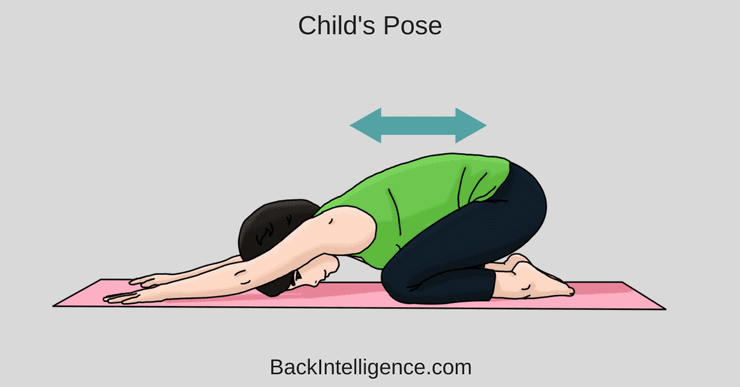
Exercise #1: Child’s Pose

Childs-Pose

How it helps:

It helps to relieve pressure on the facet joints.

How to do it:

– Begin by positioning yourself on the floor on your hands and knees with your knees slightly wider than your hips.
– Turn your toes inwards to touch and push your hips backwards while bending your knees.
– Once you’re in a comfortable position, straighten your arms forward and allow your head to fall forwards into a relaxed position.
– Hold this position for 20 to 30 seconds.
– Slowly return to the starting position.
– Aim for 3 repetitions.

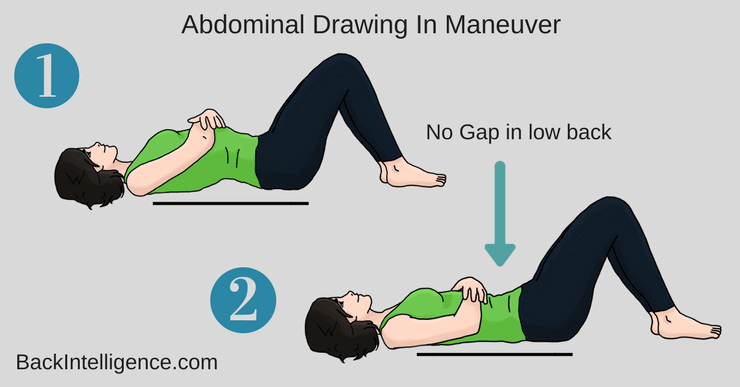
Exercise #2: Pelvic Tilt

Abdominal drawing in maneuver

How it helps:

It helps to strengthen the muscles of the lower back and abdomen.

How to do it:

– Begin by lying on your back with your feet positioned flat on the floor.
– Inhale and then exhale while you draw in your abdominal muscles and push your belly button towards the floor as your try to – flatten your lower back.
– Hold this position for 5 seconds.
– Aim for 10 repetitions of this exercise.

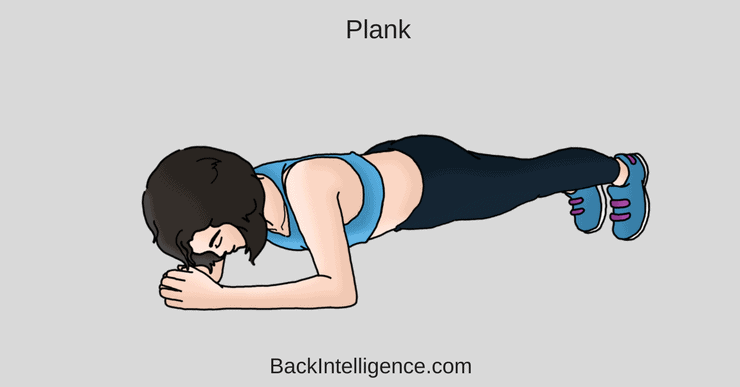
Exercise #3: Plank

plank

How it helps:

It helps to strengthen the core and butt muscles which will help improve your posture and alignment.

How to do it:

– Begin lying on your stomach with your forearms against the mat.
– Engage your core and lift your body so that you are resting on your forearms and toes.
– Hold the plank position for 30-60 seconds.
– Aim for 2 to 5 repetitions of this exercise.
– When you’re ready, increase the intensity by increasing the time you hold the plank in 10 second increments.
** Ensure to keep your back straight throughout the entire exercise.

In many cases, lower back pain caused by facet joints can mimic other conditions such as herniated discs and compressed nerve roots. If conservative treatment methods fail to reduce symptoms, consider consulting with a physiotherapist or chiropractor to determine if something else is causing your symptoms.

Watch Video On This Topic:

 Sources:

[1] Perolat R, Kastler A, Nicot B et al. Facet joint syndrome: from diagnosis to interventional management. Insights Imaging. 2018;9(5):773-789. doi:10.1007/s13244-018-0638-x

[2] Binder D, Nampiaparampil D. The provocative lumbar facet joint. Curr Rev Musculoskelet Med. 2009;2(1):15-24. doi:10.1007/s12178-008-9039-y

[3] Saravanakumar K, Harvey A. Lumbar Zygapophyseal (Facet) Joint Pain. Rev Pain. 2008;2(1):8-13. doi:10.1177/204946370800200103

Saturday, July 10, 2021

Top Ten Minutes Abs Workout For Women


Make sure to take a 30 second break between each ab exercise!

#1 WARM UP: HIGH KNEES (20 REPS, 10 EACH SIDE)

Place your feet hip width apart. Lift your right knee towards your chest then switch knees with a light hop. Move your arms along the side of your body for balance (see picture).


#2 PILATES (HOLD FOR 10 SECONDS)

Lay on your back and lift your shoulders off the floor while placing your hands next to your hip. Lift your feet up and hold.

Make sure your back touches the floor. If your back bows, raise your legs higher for a rounder back. Keep your legs straight.


#3 RUSSIAN TWIST (10 REPS, 5 EACH SIDE)

Sit on the floor in a V position keeping your knees bent. Move your fists together in front of your belly, then move them together hip to hip.

Try to move them as far to the side and down next to your hip as possible. If this is too easy, lean back further.


#4 WINDSHIELD WIPERS (10 REPS, 5 EACH SIDE)

Lie on your back and stretch your arms in a 90 degree angle away from your body. Pull in your legs by making a 90 degree angle with your legs.

Then rock them side to side like a windshield wiper making sure not to lift the shoulders off the floor.


#5 SINGLE LEG JACK KNIFE (10 REPS, 5 EACH SIDE)

Lie on your back and stretch your arms above your head. Then lift one leg up and reach your hands toward your foot at the same time.
Make sure legs and arms stay straight and your upper body is completely lifted off the floor. Slowly lower your body back down to the starting position then switch legs.


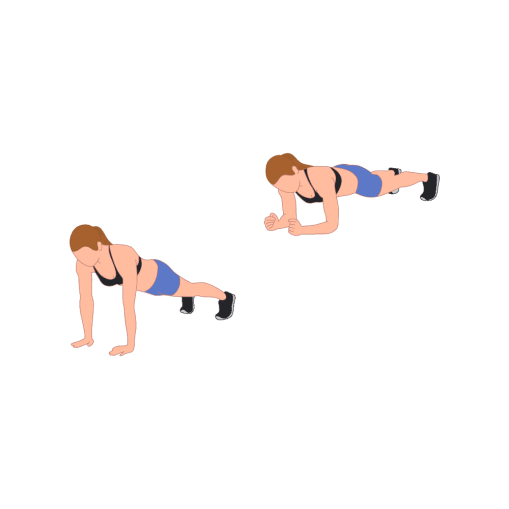
#6 PLANK (20 SECONDS)

Start on your toes and hands or elbows and keep your body straight like a board. Your feet can be hip width apart and your hands or elbows shoulder width.

Hold this position. Make sure your hips don’t drop too low or rise too high.


#7 FLUTTER KICKS (20 SECONDS OR 20 REPS, 10 EACH SIDE)

Lie on your back and place your arms next to your body (straight). Lift both legs and keep them straight while moving them up and down the opposite way.

If there is a gap between the floor and your back, raise your upper body to round out your back. You can then lean on your elbow and place them next to your body to help hold up the weight.


#8 BICYCLE CRUNCH (10 REPS, 5 EACH SIDE)

Lie on the floor and place your hand behind your head. Open up your elbows and move the left elbow towards the right knee while twisting your core. Lift the leg in a 90 degree angle towards your elbow.


Move back into the starting position then switch sides. Don’t pull on your head and be sure to keep your elbows open. You are not supposed to see your elbow in front of you.

Monday, March 15, 2021

German Volume Training Method

This method has been reported to be the most productive workout tried. It’s hard, but effective to build muscle fast! The method is called The German Volume Training or The Ten Sets Method.


This works by targeting a group of motor units, using extensive volume of repeated efforts including 10 sets of a single exercise.

The body adapts to the stress by hypertrophying the targeted fibres. With this program you can add muscle fast, even gains of 10 pounds or more in six weeks can be achieved.

Guidelines

German Volume Training method is designed to complete ten sets of ten reps with the same weight for each exercise. Beginning with a weight you could lift for 20 reps to failure.

For most people this would represent 60% of their 1RM load. For example: If you bench press 300 pounds for 1 rep, you would use 180 pounds for this exercise.

I recommend using the following body part splits:
Day 1: Chest & Back
Day 2: Legs & Abs
Day 3: Off
Day 4: Arms & Shoulders
Day 5: Off
 

Terminology understanding

Rest Intervals: Often questioned for the first several sets as the weight won’t feel heavy enough. But, there is minimal rest between each set, around 60 seconds when used in sequence and 90-120 seconds when used as a superset, this causes cumulative fatigue. Because of the importance of the rest intervals, you should time to keep the rest intervals constant.

Tempo: When using movements such as squats, dips and chins, use a 4-0-2 tempo. This means you lower the weight in four seconds, immediately change direction and lift for two seconds. For movements like curls and triceps extensions, use a 3-0-2 tempo.

Number of Exercises: One exercise per body part should be performed. Select exercises that recruit a lot of muscle mass. Triceps, kickbacks and leg extensions are out, squats and bench press are in. For individual body parts, you can do 3 sets of 10-20 reps.


Training Frequency: Because this is such an intense program, it takes longer recovery time. The average “Power Factor Rating” of the 10 sets method is a lot. One training session every four to five days per body part is plenty.

Overload Mechanism: When you’re able to do 10 sets of 10 with constant rest intervals, increase the weight on the bar by 4-to-5% and repeat the process. Refrain from using forced reps, negatives or burns. Expect to have deep muscle soreness without having set prolonging techniques.


You should perform the phase 1 program for six splits (six 5-day cycles= 30 days), then, three weeks with a lower volume program using 6 to 8 reps, allowing your body to recover and then start phase 2.

Phase 1
 
Day: 1

Exercise Sets Reps Tempo Rest
A1 Flat DB Presses 10 10 4020 90
A2 Supinated Chin-ups 10 10 4020 90
B1 Incline Flies 3 10-12 2020 75
B2 Cable rows to neck 3 10-12 2020 75

Day: 2

Exercise Sets Reps Tempo Rest
A1 Back Squats 10 10 40X0 90
A2 Lying Leg curls feet outward 10 8 40X0 90
B1 Low Cable Pull-ins 3 10 2020 75
B2 Seated Calf Raise 3 10-12 2020 75

Day 3: Off (Rest)

Day: 4

Exercise Sets Reps Tempo Rest
A1 Close grip bench press 10 10 40X0 90
A2 Incline DB Curls 10 10 40X0 90
B1 Seated Lateral Raises 3 10-12 2011 75
B2 Reverse Curls 3 10-12 40X0 75

Day 5: Off (Rest)
 

Phase 2:

After completing six 5 day cycles of the phase 1 program, choose a three week program using 6 to 8 reps per sets for 4 to 6 sets total per body part.

You can still use the same 5 day cycle or you can use another split that suits your recovery pattern.

After this 3 week block, you continue for phase 2 of the German Volume Training method, with the following changes:

Do ten sets of six reps per exercise instead of 10 sets of 10 reps. Use a load you can usually do 12 repetitions with. The aim in this phase is to do ten sets of six with that load.

Day 1:

Exercise Sets Reps Tempo Rest
A1 Incline Barbell Press 10 6 5010 120
A2 Wide grip pull-ups 10 6 5010 120
B1 Decline Flyes 3 8-10 2020 75
B2 Incline Sit ups 3 8-10 2020 75

Day 2:

Exercise Sets Reps Tempo Rest
A1 Front Squat 10 6 31X0 120
A2 Lying Leg Curls feet inward 10 6 30X0 120
B1 Back Extensions 3 8-10 2012 75
B2 Standing Calf Raise 3 8-10 22X0 75

Day 3: Off (Rest)
 
Day 4:

Exercise Sets Reps Tempo Rest
A1 Dips 10 6 31X0 100
A2 Hammer Curls 10 6 30X0 100
B1 Bent Over Lateral Raise 3 8-10 2-0-1-2 75
B2 Wrist Curls 3 10-12 2020 75

Day 5: Off (Rest)


Share...