Showing posts with label Health. Show all posts

Saturday, October 22, 2022

The Time Under Tension For Ideal Ranges

The Time Under Tension For Ideal Ranges

Varying the tempo on an exercise to manipulate the time under tension (TUT) is an excellent tool for building muscle and busting plateaus. It is also a great trick for making your in-home workouts more challenging if you are limited to a few lightweight dumbbells.

The Time Under Tension For Ideal Ranges

TUT is commonly used in strength training and bodybuilding as a way of calculating the total amount of work you place on a muscle. It refers to the total time a muscle is under strain during each set.

For example, a typical set of 8 reps on the barbell curl for the average lifter may take about 16 seconds. 1 second to lift the weight, 1 second to lower weight. Most people just move the weight as fast as possible.

However, various studies have shown that slowing the tempo, particularly on the eccentric portion of a movement (the lowering portion when your muscle is slowly elongating) provides a stimulus to the muscle that can trigger adaptations leading to higher rates of protein synthesis and muscle development.

In other words, by putting a muscle under longer bouts of strain, you can cause extensive muscle breakdown leading to greater muscle growth.

Take the same 8 reps on the barbell curl and slow down the eccentric portion (lowering the barbell) to 3 seconds, and now your total time under tension goes from 16 to 42 seconds.

The number of reps and the amount of weight have not changed, yet in the second example, you spent more than double the amount of time under tension. That is the basis of TUT training.

The Time Under Tension For Ideal Ranges

Focus on sets that last for a certain amount of time, based on your training goals while still maintaining good form and full range of motion. You will probably find out that as you slow down the movement, you will need to go lighter in weight or use drop sets to complete the last few reps without stopping.

 Sharing in caring...

Saturday, January 22, 2022

Top Workout Routines for Teens


Though most teens believe that the longer they workout in the gym the more bodybuilding results they will get, in reality, bodybuilding workouts should not last more than 1 hour tops with 45 minutes being an even more optimal length. The reason for this is because after 45-60 minutes of intense training, testosterone levels begin to fall and cortisol levels begin to rise. Not a good scenario for those of us who would like to build muscle and lose some body fat. Therefore, the mission is to get in and out of the gym; so that means no socializing during workout time.

Top Workout Routines for Teens


Thus, in order to maximize your results, you need to be able to hit each muscle efficiently during the allotted time, with perfect form and the right intensity. The bodybuilding workouts shown below will get you started on the right track.​​

Sample Bodybuilding Workout Routines for Teens

The bodybuilding workouts shown below will get you started on the right foot once you have gone through the beginning and intermediate phases of bodybuilding.

Workout Notes
 
Workout Frequency: You can do this workout 3 days on followed by one day off. If you need more time to recover from your workouts, you can train 2 days on and 1 day off picking up the next workout in the sequence on the following training day. Hardgainers do best by training Monday, Tuesday, Thursday, and Friday with weekends off.

Top Workout Routines for Teens


Use Perfect Form: Make sure that you use perfect form on all exercises for maximum stimulation and injury prevention. Never sacrifice form in order to add more weight.
Keep It Fast Paced: Rest 60 seconds in between sets.​​​

Workout (A): Chest/Shoulders/Triceps

Chest
Incline Bench Press (alternate with Incline Dumbbell Press every other workout) 4 sets of 12, 10, 8, 8 reps
Flat Dumbbell Press (Chest Dips every other workout) 3 sets of 10-12 reps
Incline Flyes 3 sets of 12-15 reps (alternate with Flat Flyes every other workout)

Shoulders
Dumbbell Shoulder Press (alternate with Upright Rows every other workout) 3 sets of 12, 10, 8 reps
Lateral Raises (alternate with Military Press every other workout) 3 sets of 10-12 reps
Bent Over Laterals (alternate with Rear Delt Machine) 3 sets of 12-15 reps

Triceps
Triceps Dips on Parallel Bars (alternate with Close Grip Bench Press every other workout) 4 sets of 12, 10, 8, 8 reps
Straight Bar Triceps Pushdowns (alternate with Overhead Dumbbell Triceps Extensions every other workout) 4 sets of 10-12 reps​

Workout (B): Thighs/Hamstrings/Abs

Quads
Squats (alternate with Wide Stance Squats) 4 sets of 12, 10, 8, 8 reps
Leg Press (alternate with Hack Squats) 3 sets of 10-12 reps
Leg Extensions (alternate with One Legged Leg Extensions) 3 sets of 12-15 reps

Hamstrings
Standing Leg Curls (alternate with Lying Leg Curls w/ Toes Out) 3 sets of 8-10 reps
Lying Leg Curls w/ Toes In (alternate with Seated Leg Curls) 3 sets of 8-10 reps
Lunges (alternate with Step Ups) 3 sets of 12-15 reps
(Note: Press with your heels on lunges and step ups)

Abs
Hanging Leg Raises (alternate with Knee-Ins) 4 sets of 10-15 reps
Crunches on Exercise Ball (alternate with Bicycle Crunches) 4 sets of 10-15 reps​
Workout (C): Back/Biceps/Calves

Back
Wide Grip Pull-ups to Front (alternate with Wide Grip Pull-ups to Back) 4 sets of 8-12 reps
(Note: Use Pull-up assist machine if unable to do without help)
Reverse Close Grip Chin-ups (alternate with T-Bar Rows) 3 sets of 10-12 reps
(Note: Use Pull-up assist machine if unable to do without help)
Low Pulley Rows (alternate with One Arm Rows every other workout) 3 sets of 12-15 reps

Biceps
Concentration Curls (alternate with Preacher Curls) 3 sets of 8-10 reps
Incline Curls (alternate with Incline Hammer Curls) 3 sets of 10-12 reps
Hammer Curls (alternate with High Pulley Curls) 3 sets of 12-15 reps

Calves
Standing Calf Raises (alternate with Calf Press) 4 sets of 8-10 reps
Seated Calf Raises with Toes In (alternate with Seated Calf Raises with Toes Out) 4 sets of 15-20 reps

Wednesday, July 14, 2021

Treatment & Exercise Of Lumbar Facet Joint Pain


Lumbar Facet joint syndrome can be a significant source of lower back pain, accounting for 15% to 45% of lower back pain

While lumbar facet joint syndrome cannot be reversed, research has shown that exercise, certain lifestyle changes, and management of back pain with conservative treatment methods, including rest, ice, heat and over-the-counter medications, can help to control symptoms and improve quality of life.

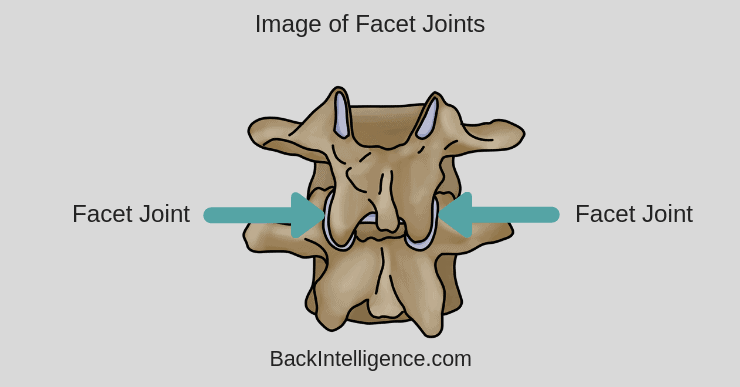
Here’s an image showing the Facet joint where the pain happens at the back of your spine:

Facet Joint Image

Symptoms of Facet Joint Pain Syndrome
-Widespread, achy back pain (affecting one/both sides of body) that radiates to one or both buttocks, sides of the groin, and thighs, and stops above the knee.-Pain may be chronic or come and go.-Pain is worse from spinal extension (leaning back) and lateral (side) flexion to the affected side (leaning to the side of the affected facet joint).-Pain and tenderness to palpation of the affected area.-Prolonged periods of inactivity and standing can worsen pain.-Pelvic and abdominal pain may be present.

Certain movements that take pressure off of the affected facet joint, such as leaning forward (flexion), or towards the healthy side, as well as changing positions can ease pain.

Causes of Lumbar Facet Joint Pain

Facet joint degenerative osteoarthritis is the most common form of Facet joint pain. It is the result of degenerative changes to the joints that are located between the bones of the spine, known as the facet joints. This condition is often (not always) tied to the degenerative changes of the spine’s intervertebral disks.

The cartilage inside the facet joints can break down, leading to joint space narrowing and inflammation, which can trigger pain signals in the surrounding nerve endings; the muscles in the area then stiffen and spasm, leading to typical symptoms of lumbar facet joint syndrome.

Risk factors for Lumbar Facet Joint Pain

Conditions that change the alignment and movement of the facet joints in the lumbar spine can increase the risk of lumbar facet joint syndrome. These conditions include:-Overuse Injuries (i.e. traumatic fall, sporting injury, etc)-Obesity.-Poor posture and movement (i.e. excessive lumbar lordosis, kyphosis, etc.).-Spinal conditions (i.e. scoliosis, kyphosis).

Treatment for Lumbar Facet Joint Pain

The approach to treatment of cervical facet joint syndrome is typically conservative, and includes:-Resting to allow the facet joints to relax and reduce inflammation.-Applying ice to the affected area in 10 to 15 minute intervals to help reduce inflammation.-Stretching and strengthening exercises (Physical Therapy).-Core exercises to help achieve good spine alignment and posture.-Posture/Ergonomics education to keep the facet joints in alignment and reduce unnecessary pressure on the affected facet joints.-Medications, such as non-steroidal anti-inflammatory drugs (NSAIDs) or muscle relaxants, to ease muscle spasm in the muscles surrounding the affected facet joints.-Behavioral therapy

3 Exercises For Facet Joint Pain Relief in Low Back:

Please try the following at your own discretion. If you feel more pain from these exercises, then you should seek medical help.

In many cases, lower back pain caused by facet joints can mimic other conditions such as herniated discs and compressed nerve roots. If conservative treatment methods fail to reduce symptoms, consider consulting with a physiotherapist or chiropractor to determine if something else is causing your symptoms.

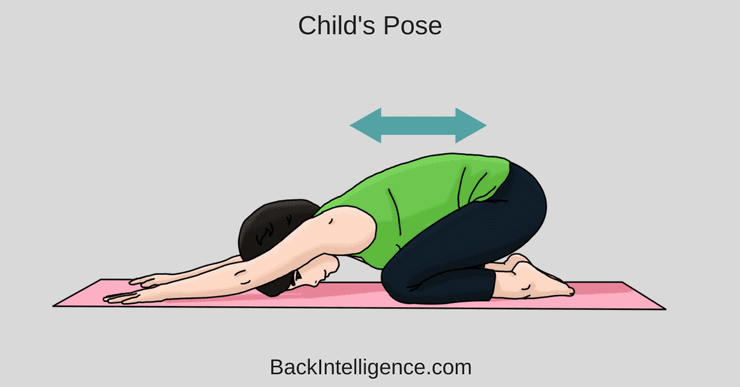
Exercise #1: Child’s Pose

Childs-Pose

How it helps:

It helps to relieve pressure on the facet joints.

How to do it:

– Begin by positioning yourself on the floor on your hands and knees with your knees slightly wider than your hips.
– Turn your toes inwards to touch and push your hips backwards while bending your knees.
– Once you’re in a comfortable position, straighten your arms forward and allow your head to fall forwards into a relaxed position.
– Hold this position for 20 to 30 seconds.
– Slowly return to the starting position.
– Aim for 3 repetitions.

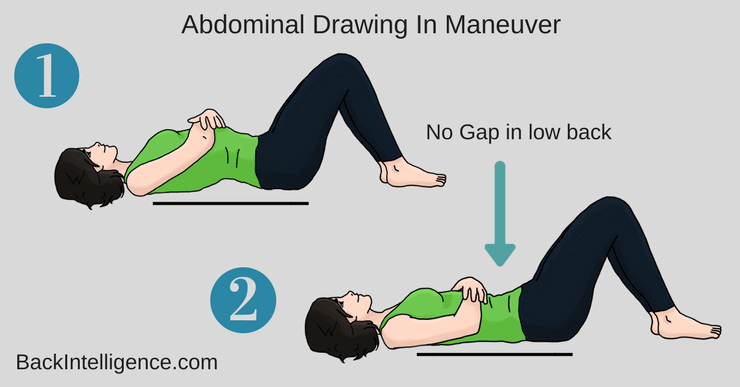
Exercise #2: Pelvic Tilt

Abdominal drawing in maneuver

How it helps:

It helps to strengthen the muscles of the lower back and abdomen.

How to do it:

– Begin by lying on your back with your feet positioned flat on the floor.
– Inhale and then exhale while you draw in your abdominal muscles and push your belly button towards the floor as your try to – flatten your lower back.
– Hold this position for 5 seconds.
– Aim for 10 repetitions of this exercise.

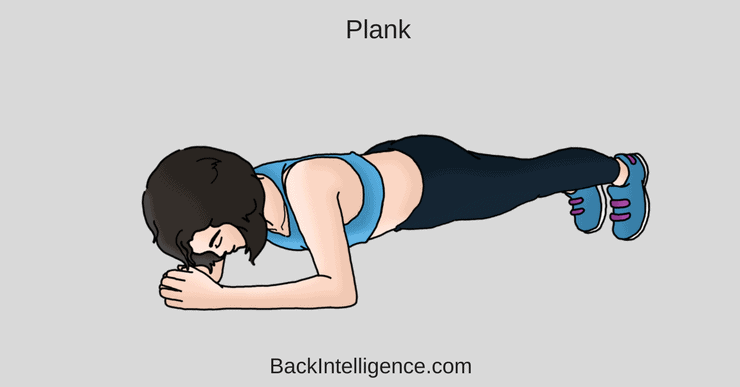
Exercise #3: Plank

plank

How it helps:

It helps to strengthen the core and butt muscles which will help improve your posture and alignment.

How to do it:

– Begin lying on your stomach with your forearms against the mat.
– Engage your core and lift your body so that you are resting on your forearms and toes.
– Hold the plank position for 30-60 seconds.
– Aim for 2 to 5 repetitions of this exercise.
– When you’re ready, increase the intensity by increasing the time you hold the plank in 10 second increments.
** Ensure to keep your back straight throughout the entire exercise.

In many cases, lower back pain caused by facet joints can mimic other conditions such as herniated discs and compressed nerve roots. If conservative treatment methods fail to reduce symptoms, consider consulting with a physiotherapist or chiropractor to determine if something else is causing your symptoms.

Watch Video On This Topic:

 Sources:

[1] Perolat R, Kastler A, Nicot B et al. Facet joint syndrome: from diagnosis to interventional management. Insights Imaging. 2018;9(5):773-789. doi:10.1007/s13244-018-0638-x

[2] Binder D, Nampiaparampil D. The provocative lumbar facet joint. Curr Rev Musculoskelet Med. 2009;2(1):15-24. doi:10.1007/s12178-008-9039-y

[3] Saravanakumar K, Harvey A. Lumbar Zygapophyseal (Facet) Joint Pain. Rev Pain. 2008;2(1):8-13. doi:10.1177/204946370800200103

Thursday, March 25, 2021

Carrot A Day To Lose Fat And Prevent Cancer

Eat One a Day to Lose Fat and Prevent Cancer

Make your body more resistant to gaining fat. Bonus: The same inexpensive food helps you fight off two forms of cancer.


A while back, I wrote about a really exciting meta-analysis (where scientists combine the results from multiple studies) that showed how eating just a carrot a day could reduce a man's chances of developing prostate cancer by 50%.

The paper found that the more often men ate carrots and the greater the amount of carrots eaten, the less likely they were to develop prostate cancer. They even gave some concrete numbers: For every 10 grams of carrots consumed each day, men reduced their risk of developing prostate cancer by 5%.

That meant that eating just 50 grams of carrot a day – which you can easily get by eating a single average-sized carrot – would offer you some significant protection against one of the most frightening of male maladies, cutting the incidence in half.

But maybe that wasn't enough to make you start gnoshing on carrots. Maybe you need to be hit on the head not only once, but two or three times.

Fine, because science has since been hard at work on several other promising studies on carrots, including one on how they might help people lose fat and put on muscle.


Is It a Carrot or a Long, Orange, Physique Stick?

When that study on carrots and prostate cancer came out, the researchers thought that the root vegetable's beneficial effects had something to do with the large amount of carotenoids they contain.

While that may still be true, scientists are now instead focusing on two fatty alcohols that are found in high concentrations in carrots and other root vegetables. These fatty alcohols are named falcarinol and falcarindiol and Danish scientists found that each of these fatty alcohols block fat cells from absorbing more fat, along with causing muscle cells to absorb more glucose.

The dual-effect of the fatty alcohols was so pronounced that the Danes compared it to rosiglitazone, an anti-diabetic drug that binds to PPAR-gamma (a protein that acts as a receptor for fat) in fat cells and makes them more sensitive to insulin.

The comparison is apt because falcarinol and falcarindiol also act on PPAR-gamma. Just like the drug, the two plant chemicals were actually exhibiting insulin sensitizing properties, which, when combined with proper nutrition and exercise, can lead to increased muscle and reduced body fat.
What Else You Got?

It looks like those two fatty alcohols found in carrots also combat colon cancer. A 2017 study involving rats found that falcarinol and falcarindiol greatly reduced the number of polyp clusters and tumors found in rats that had been fed large amounts of a carcinogen.

More convincingly, though, a 2020 study that followed 57,053 Danish people from the mid 1990s to 2016 found that those who ate between two and four carrots a day were significantly less likely to develop colon cancer than Danes who consumed fewer carrots.
How to Use This Info

How to use this information? Are you kidding? Do I have to spell it out for you? Eat a damn carrot! Every day!

One proviso, though: The carrots need to be eaten raw. Carrot juice will probably suffice, as long as you actually saw the carrot being fed into the blender instead of it being some grocery-store version that's been centrifuged or masticated to death, leaving all its falcarinol and falcarindiol beaten and bleeding.

I should also add that parsnip, another root vegetable, actually contains more of these two fatty alcohols than carrots, but I doubt if anyone wants to eat raw parsnips. Some of them have a tinge of sweetness, but overall they taste like a blend between a carrot, a potato, and a gym sock.

Do yourself a favor and stick with the carrots.


Sources:
Ulrik Deding, Gunnar Baatrup, Lars Porskjaer Christensen, Morten Kobaek-Larsen, "Carrot Intake and Risk of Colorectal Cancer: A Prospective Cohort Study of 57,053 Danes," Nutrients, Volume 12, Issue 2, 27 January, 2020.
Morten Kobaek-Larsen, Rime B. El-Houri, Lars P. Christensen, Issam Al-Najami, Xavier Fretté and Gunnar Baatrup, "Dietary polyacetylenes, falcarinol and falcarindiol, isolated from carrots prevents the formation of neoplastic lesions in the colon of azoxymethane-induced rats," Food and Function, Issue 7, 2015.
Rime El-Houri, Dorotka Kotowska, Kathrine Christensen, et al. "Polyacetylenes from carrots (Daucus carota) improve glucose uptake in vitro in adipocytes and myotubes," Food and Function, Issue 7, 2015.
Xu X1, Cheng Y, Li S, Zhu Y, Xu X, Zheng X, Mao Q, Xie L. Dietary carrot consumption and the risk of prostate cancer. Nur J Nutr. 2014 Dec;53(8):1615-23.

Monday, March 15, 2021

German Volume Training Method

This method has been reported to be the most productive workout tried. It’s hard, but effective to build muscle fast! The method is called The German Volume Training or The Ten Sets Method.


This works by targeting a group of motor units, using extensive volume of repeated efforts including 10 sets of a single exercise.

The body adapts to the stress by hypertrophying the targeted fibres. With this program you can add muscle fast, even gains of 10 pounds or more in six weeks can be achieved.

Guidelines

German Volume Training method is designed to complete ten sets of ten reps with the same weight for each exercise. Beginning with a weight you could lift for 20 reps to failure.

For most people this would represent 60% of their 1RM load. For example: If you bench press 300 pounds for 1 rep, you would use 180 pounds for this exercise.

I recommend using the following body part splits:
Day 1: Chest & Back
Day 2: Legs & Abs
Day 3: Off
Day 4: Arms & Shoulders
Day 5: Off
 

Terminology understanding

Rest Intervals: Often questioned for the first several sets as the weight won’t feel heavy enough. But, there is minimal rest between each set, around 60 seconds when used in sequence and 90-120 seconds when used as a superset, this causes cumulative fatigue. Because of the importance of the rest intervals, you should time to keep the rest intervals constant.

Tempo: When using movements such as squats, dips and chins, use a 4-0-2 tempo. This means you lower the weight in four seconds, immediately change direction and lift for two seconds. For movements like curls and triceps extensions, use a 3-0-2 tempo.

Number of Exercises: One exercise per body part should be performed. Select exercises that recruit a lot of muscle mass. Triceps, kickbacks and leg extensions are out, squats and bench press are in. For individual body parts, you can do 3 sets of 10-20 reps.


Training Frequency: Because this is such an intense program, it takes longer recovery time. The average “Power Factor Rating” of the 10 sets method is a lot. One training session every four to five days per body part is plenty.

Overload Mechanism: When you’re able to do 10 sets of 10 with constant rest intervals, increase the weight on the bar by 4-to-5% and repeat the process. Refrain from using forced reps, negatives or burns. Expect to have deep muscle soreness without having set prolonging techniques.


You should perform the phase 1 program for six splits (six 5-day cycles= 30 days), then, three weeks with a lower volume program using 6 to 8 reps, allowing your body to recover and then start phase 2.

Phase 1
 
Day: 1

Exercise Sets Reps Tempo Rest
A1 Flat DB Presses 10 10 4020 90
A2 Supinated Chin-ups 10 10 4020 90
B1 Incline Flies 3 10-12 2020 75
B2 Cable rows to neck 3 10-12 2020 75

Day: 2

Exercise Sets Reps Tempo Rest
A1 Back Squats 10 10 40X0 90
A2 Lying Leg curls feet outward 10 8 40X0 90
B1 Low Cable Pull-ins 3 10 2020 75
B2 Seated Calf Raise 3 10-12 2020 75

Day 3: Off (Rest)

Day: 4

Exercise Sets Reps Tempo Rest
A1 Close grip bench press 10 10 40X0 90
A2 Incline DB Curls 10 10 40X0 90
B1 Seated Lateral Raises 3 10-12 2011 75
B2 Reverse Curls 3 10-12 40X0 75

Day 5: Off (Rest)
 

Phase 2:

After completing six 5 day cycles of the phase 1 program, choose a three week program using 6 to 8 reps per sets for 4 to 6 sets total per body part.

You can still use the same 5 day cycle or you can use another split that suits your recovery pattern.

After this 3 week block, you continue for phase 2 of the German Volume Training method, with the following changes:

Do ten sets of six reps per exercise instead of 10 sets of 10 reps. Use a load you can usually do 12 repetitions with. The aim in this phase is to do ten sets of six with that load.

Day 1:

Exercise Sets Reps Tempo Rest
A1 Incline Barbell Press 10 6 5010 120
A2 Wide grip pull-ups 10 6 5010 120
B1 Decline Flyes 3 8-10 2020 75
B2 Incline Sit ups 3 8-10 2020 75

Day 2:

Exercise Sets Reps Tempo Rest
A1 Front Squat 10 6 31X0 120
A2 Lying Leg Curls feet inward 10 6 30X0 120
B1 Back Extensions 3 8-10 2012 75
B2 Standing Calf Raise 3 8-10 22X0 75

Day 3: Off (Rest)
 
Day 4:

Exercise Sets Reps Tempo Rest
A1 Dips 10 6 31X0 100
A2 Hammer Curls 10 6 30X0 100
B1 Bent Over Lateral Raise 3 8-10 2-0-1-2 75
B2 Wrist Curls 3 10-12 2020 75

Day 5: Off (Rest)


Share...

Sunday, March 7, 2021

Top Bodyweight Exercise To Start Right Now

Best Bodyweight Exercises To Start Building A Lean, Strong Physique Right Now


One of the best things I learned about over the years looking into physical fitness is the idea of bodyweight exercises.

They are a great way to stay in shape if you’re already exercising regularly but can’t get to a gym. But they are also great to incorporate into your regular regimen.

Also, bodyweight exercises are fantastic for beginners just starting to get into exercising routines. They are a great way to learn about technique. You can start resistance training without the need for any equipment.

If you are limited in where you can find weights or machines that you think you might need for your workout, well worry no more.

As I alluded to already, you can do bodyweight exercises virtually anywhere… home, gym, outside…you’re only limited by your own creativity.

One of the most important things to keep in mind while performing these exercises is technique. You want to get the most out of them. You don’t want to spoil their effectiveness by not doing them properly.

If you’re just starting out with exercising, stick with a regular regimen of bodyweight exercises and you will progress quickly.

These are the kinds of routines I did when I was playing sports regularly. They’ll improve your strength and endurance fast.

I still incorporate lots of them in my routine today.

Eventually, you’ll graduate into more complex workouts. I guarantee that bodyweight exercises will be a regular part of those routines.

Sounds Good But How Long Can I Do Bodyweight Exercises?

There is something you will probably wonder about as you get stronger and more fit. It’s whether you can actually progress that far with bodyweight exercises. You’ll probably also worry about plateauing quickly.

After all, you might be thinking, hey, I’m going to be lean and getting stronger. How long could these bodyweight exercises actually benefit me?

When you start feeling that way about your routine or start getting bored, there’s something you have to keep in mind. It’s something that people tend to forget about with these kinds of routines.

It’s the concept of progressive overload.
Image by skeeze from Pixabay

This principle ensures you continue to challenge your muscles and your body will respond in kind. You increase the level of difficulty and you will see the difference in your body.

Without progressive overload your body will not change much after a certain point.

However, if you are content with the level of physical fitness you attained with your regimen of bodyweight exercises and do not want to progress further, you can simply maintain what you achieved by repeating the same routine or similar variations of it.

Be happy. That’s what I say.

Simple enough right? But I’m guessing you’ll want to keep moving forward.
Doesn’t It Get Boring?

I’d also suggest trying to mix it up a little just so you don’t get bored.

So whether you’re thinking about doing bodyweight exercises for strength, burning calories, for arms, for legs, for back, for toning or for whatever…

Whew…

Here is a list of body weight exercises that are easy to do and sure to get you on track for that lean, strong body you want… Oh, and this should keep it exciting.

1. Push Ups – The Granddaddy Of Body Weight Exercises

Without question push ups are my favorite body weight exercise. Even if you haven’t tried to do even one yet, if you’re serious about getting into shape this is one exercise you want in your arsenal.

It will help you develop upper body strength. Even if you can’t do one normally, there are easier variations to get you started.

Once you have the technique down, you can work on the repetitions. Once, your numbers are up and it’s coming easy for you, there are variations you can try to make it harder.

It is such a great movement. It strengthens and tones so many parts of your body. It’s great for your chest, shoulders, upper back and your core. You can even activate your glutes for a solid frame to push up from.

Here’s a couple guys from over at dynamicsofmotion.com using pretty good form for the standard push up. They cover all the bases and this is a good place to start from for this exercise.

You can make it a little easier

Now if you’re just starting out and this form is too difficult for you, there are easier ways to do it.

First, instead of being up on your toes, you can do it from your knees. This will make it much easier and help you to begin to develop that upper body strength.

However, one of the great benefits of the push up is the development of core strength. If you do this move from your knees, you’re not doing much for your core.

I’d suggest a couple other variations. You can do it standing up a couple feet from a wall. Put your arms straight out and hands flat against the wall. Then do the push up against the wall, keeping your feet in place.

An even better beginner version is simply getting something to elevate your hands. An easy idea is a chair. Make sure it is sturdy and won’t move. Put your hands flat against the seat, stretch your legs out straight behind you and go for it.

You’ll find these easier than the standard position and still activating most of the muscles you want to develop and tone.
How about a challenge?

If you want to make it more difficult, there are a couple variations. As you push up, try and launch your hands off the floor. Just make sure you’re doing it on a cushioned surface so you don’t injure your wrists.

Or, for a different kind of challenge. Instead of flat across the floor, elevate your feet behind you. You can put them up on a chair or a step. You will definitely feel that and it attacks the chest at a slightly different angle.

2. The Squat

From the upper body we move to the legs and glutes with the squat.

This is a great compound movement that really benefits the body in a number of ways.

I found it helped me to build my leg strength as well as balance and coordination.

You’ve probably seen this one performed by big muscular guys with a bar across their shoulders and a ton of weight on each side.

That is definitely something you want to build up to and not attempt at your first go with this exercise.

Also, you don’t have to worry about the bar if you’re not going for massive legs and weight.

Here’s the great news. You can develop your legs and strength with this move, simply by using your body weight.

Here’s a great demonstration by Anna Renderer of proper form on the squat:

An added bonus that Anna over at Popsugar gives you is a tip for building back and glute strength if you are having trouble with the basic squat. Really helpful tips. She really breaks it down well.

I never used to enjoy doing squats. Always thought of them as an inconvenience. But it’s so important to take care of your legs and lower body.

Those are big muscle groups down there and really important as the foundation of so many other movements that your body makes. So don’t neglect your legs.

A little regression tip

If you are wrestling with the basic squat and working on building your strength, here’s an idea.

Do the squat into a chair. Only go down as far as the seat of the chair and then come back up. As you get stronger, you’ll be able to do the full squat and won’t need the chair.

… Or maybe a little tougher

If you are looking for more of a challenge with this movement, try this:

Go down on one knee. Hold on to the edge of a table or door for balance only. Do not use it for leverage.

Now push up with the one foot on the floor, keeping your other knee bent. This is a kind of single leg squat and you will really feel the burn with this one. If you can do it without holding on to anything, even better.

If that’s still too easy for you, throw on a weighted vest or hold a dumbell while doing the squat.

Just don’t go for these advanced variations until you’ve got proper form for the squat. But when you do, you’ll be developing some strong, toned legs.

3. The Plank

Most people like it, some aren’t crazy about it but I found it does the trick for me.

The plank is great for your core and there are sooooo many variations you can try to bring in other parts of your body.

I incorporate it into my warm up and I enjoy doing it with a couple variations on its own as part of an abdominal workout day.

Here’s a good demonstration by Scott over at Scotthermanfitness.com of how to use proper form with the plank. He provides a good demo with all the helpful tips you’ll need to execute this move correctly.

Now here’s the thing with the plank. It’s a good burn in the beginning and you’ll definitely feel it.

Start doing it for 30 seconds to a minute. Eventually you’ll get really good at that and may want to simply try holding it for longer.

Try changing it up

I would suggest changing it up to get even more out of the movement. For example, from the standard position, reach straight out with your arm hold it, then switch to the other arm. Go back and forth and see what that does.

Also, try doing it from a fully extended push up position. Instead of doing it on your forearms do it on the palms of your hands. Try alternating reaching out with your hands again.

Another great variation I enjoy from the push up position is alternating bringing your knees up to your elbows. You can do it straight forward, right knee to right elbow or even more challenging, across your midsection, right to left, alternating back and forth. See how that feels.

Celebrity fitness trainer Harley Pasternak is a big fan of bodyweight exercises. One variation that he really likes is the Pike Plank.

How about for strength in your back

An additional variation to bring into play your posterior chain is the reverse plank.

This is a really good one. Some might argue, even better than the original.

With the reverse you lie on your back. Legs together and straight out. Then extend your arms out on both sides with your palms up. Pressing from your upper back and heels, lift your hips off the floor. And hold. See how that feels. Great for the posterior chain.

Do it for intervals just like the regular plank. I really like this variation as well. Make sure to have some music going so you don’t have to listen to yourself breathing.

4. The Mule Kick

If you’re looking for a full body workout that will tone and condition your body, look no further than the mule kick.

This is one that will definitely get your heart rate going and build up a good sweat.

Here’s a pretty good demo of proper form for the mule kick brought to you by the folks over at Beachbody. I apologize in advance for the music. You might want to turn down your volume.

Did you turn the volume off completely? That’s what I thought.

So a couple quick points. This is not to be confused with the single leg mule kick done one at time as a lift to work your glutes.

This is the full body, real mofo and trust me when you start doing it, you’ll see what I mean.

The variation that I prefer is keeping the legs together on the up kick but do what feels best for you. Even better, alternate from one to the other and see how it goes.

Another slightly easier version involves less of a kick. Instead of kicking up and out, just kick up keeping your knees bent and tap your butt with your heels.

In the beginning I’m guessing you’ll hate this one. But it just might grow on you. Great for a day when you are working your shoulders. You’ll see what I mean.

5. The Pull Up – A Must Have Bodyweight Exercise

This would probably be considered another granddaddy of bodyweight exercises. But I’ve already used that adjective so I’ll just say this is a big one.

Up until now you didn’t need anything other than your own body to perform the bodyweight exercises I’ve highlighted.

Granted, that may mean this is not as pure a bodyweight exercise but it still is so let’s just let that go.

So you’re going to have to grab onto something to do this one. I highly recommend a bar.

Some people might try a tree branch or ledge. But I’d still recommend a bar.

Although, hanging rings are great for this as well.

If you don’t have a bar you can get one from a sporting goods store. It’ll be affordable. Get one with the multi-directional grips. Totally worth it.

Here’s a great demo of proper technique for the pull up brought to you by the folks at Calisthenicmovement. This is one of the most thorough tutorials ever. They do a great job of covering all the variations of this amazing bodyweight exercise.

Quite a bit of info. in that demo. Lots of good stuff.

I’m a big fan of the arched back with scapular contraction because this really activates your back muscles. It also puts less strain on your shoulders.

You’re going to be doing lots of these over time and technique will be important in the long run to prevent injury and allow you to continue to do the movement for many years to come.

I also heard to put even less stress on your shoulders over time, use the alternative grip with your palms facing inwards. When you look at the multi-directional grip bar you’ll see what I mean.

Now if you haven’t done pull ups before you may be looking at this exercise and think… You’ve Got To Be Kidding! It can be a little overwhelming at first.

A great beginner’s variation to build muscle and strength

So here is what you do to get started.

Try a reverse pull up. This is where you put something under the bar so that you can get yourself up to the top position. Try a step stool or a chair. Give yourself enough room underneath so you can come down without hitting whatever you are using.

Alternatively, if you can grip the bar from a standing position, just jump up from the starting position and try to hold yourself for a second at the top.

However you get to the top position to start, simply lower yourself down slowly. This will help you to develop the grip and back strength to eventually do a proper pull up.

If you’re going to a gym, find the lat pull down machine. Doing sets with this type of machine will help you develop the strength needed to perform a proper pull up.

There you have it. These are some of the best bodyweight exercises out there. Fun to do and guaranteed to tone and strengthen your body if you stick with them.

There are sooooooo many more out there but these 5 are at the top of my list. I will probably do another post at some time if there is interest in others or if you want to know about more variations of the ones I mentioned.

These are great and really enjoyable to integrate into your bodyweight workout plan. Give them a shot and let me know what you think.


Also, if you’ve got others you’d like to share, I’d like to hear about them.

Wednesday, February 17, 2021

How To Perform Deadlift - Tutorial

Even if you are new, you would have known about this extremely common exercise performed by bodybuilders and average trainers.

However, the world ‘deadlift’ can seem extremely daunting.

You will understand that ‘deadlifting’ is one of the must do exercises to get you closer to looking in great shape. The deadlift can benefit all types of fitness levels, but also be damaging if performed wrong.

Deadlifting is one of few exercises that work all major muscle groups in the body. Depending on the variation and stance it can work your:

Lower back
Hamstrings
Glutes
Calves
Quads
Upper back
Traps
Spinal erectors
Hips
Glutes
Hamstrings

Why not stop and find a different approach. Stop conventional deadlifting and try different variations. Multiple variations will push your deadlift PB in the right direction.

Put these variations into your training plan and feel stronger, faster, more powerful but most of all muscle gains.

It’s up to you to decide which deadlift is your type and most suited to your goals, strengths and weaknesses.

Types And Variations Of The Deadlift

1. Jefferson Deadlift


The Jefferson deadlift – also known simply as the Jefferson lift – is a classic strongman movement. The Jefferson deadlift is great for strength, power, core stability, and hip durability. It should be a staple in any serious strength athlete’s routine.

The movement is a great way to encourage people to get their knees open so they can take a wider stance in their squats while building some rotational range of motion. It also coaxes them outside of a pure saggital plane movement pattern that can become dominant if not addressed.

The cool thing about a Jefferson deadlift is everyone will have a slightly different way of approaching it. The basics are as follows:
Straddle the bar
Grab the bar
Stand up with the bar

More specifically:
Make sure your spine remains relatively linear so you aren’t rounding or seriously deviating away from a neutral position.
When you start pulling, make sure your knees don’t collapse towards the midline in a valgus party you sure don’t want to be invited to.
Don’t lock out your knees before your hips get through the movement; otherwise you’ll be doing a really awkward good morning with nothing but your hips.
Take a grip that’s vertical under your shoulders and not wider.

2. Sumo Deadlift

How to:
Begin with a bar loaded on the ground.
The feet should be set very wide, near the collars. Bend at the hips to grip the bar.
The arms should be directly below the shoulders, inside the legs, and you can use a pronated grip, a mixed grip, or hook grip.
Lower your hips, looking forward with your head and your chest up.
Drive through the floor, spreading your feet apart, with your weight on the back half of your feet.
Extend through the hips and knees.
As the bar passes through the knees, lean back and drive the hips into the bar, pulling your shoulder blades together.
Return the weight to the ground by bending at the hips and controlling the weight on the way down.

The sumo deadlift will place emphasis on the quads and provides a range of motion which allows you to lift heavier.

3. Hex or Trap Bar Deadlifts


How to:
For this exercise load a trap bar, also known as a hex bar, to an appropriate weight resting on the ground.
Stand in the enter of the apparatus and grasp both handles.
Lower your hips, look forward with your head and keep your chest up.
Begin the movement by driving through the heels and extend your hips and knees.
At the completion of the movement, lower the weight back to the ground under control.

By using the hex bar you can change the mechanics behind the deadlift and lift evenly distributing your weight.

4. Snatch Grip Deadlift


How to:
The snatch deadlift strengthens the first pull of the snatch. Begin with a wide snatch grip with the barbell placed on the platform.
The feet should be directly under the hips, with the feet turned out.
Squat down to the bar, keeping the back in absolute extension with the head facing forward.
Initiate the movement by driving through the heels, raising the hips.
Drive your hips through the bar as you lay back.
Return the bar to the platform by reversing the motion.

The snatch deadlift mainly works the hamstrings. In the snatch grip deadlift your hands take on a wider grip.

5. Romanian Deadlift, Stiff Legged Deadlift, Straight Leg Deadlift


How to:
Hold a bar at hip level with a pronated (palms facing down) grip. Your shoulders should be back, your back arched, and your knees slightly bent.
Lower the bar by moving your butt back as far as you can. Keep the bar close to your body, your head looking forward, and your shoulders back.
At the bottom of your range of motion, return the starting position by driving the hips forward to stand up tall.

The Romanian deadlift- sometimes called the straight legged dead lift focuses on using the hamstrings.

6. Deficit Deadlift / Rack Pulls


How to:
Set up in a power rack with the bar on the pins. The pins should be set just below the knees, just above, or in the mid thigh position.
Position yourself against the bar in proper deadlifting position.
Your feet should be under your hips, your grip shoulder width, back arched, and hips back to engage the hamstrings.
Since the weight is typically heavy, you may use a mixed grip, a hook grip, or use straps to aid in holding the weight.
With your head looking forward, extend through the hips and knees, pulling the weight up and back until lockout.
Return the weight to the pins and repeat.

The deficit deadlift can use a conventional and snatch grip width.

 7. The Hack Lift


How to:
Stand up straight while holding a barbell behind you at arms length and your feet at shoulder width.
While keeping your head and eyes up and back straight, squat until your upper thighs are parallel to the floor.
Pressing mainly with the heel of the foot and squeezing the thighs.
Repeat for the recommended amount of repetitions.

Variations: This exercise can also be performed with your heels slightly elevated on a small block.

The hack lift is a deadlift that focuses on the quadriceps.

8. Conventional Deadlift


How to:
Approach the bar so that it is centred over your feet. Your feet should be about hip-width apart.
Bend at the hip to grip the bar at shoulder-width allowing your shoulder blades to protract.
With your feet and your grip set, take a big breath and then lower your hips and flex the knees until your shins contact the bar. Look forward with your head.
Keep your chest up and your back arched, and begin driving through the heels to move the weight upward.
After the bar passes the knees aggressively pull the bar back, pulling your shoulder blades together as you drive your hips forward into the bar.
Lower the bar by bending at the hips and guiding it to the floor.

Conventional deadlifts target and work the lower back, calves, forearms, glutes, hamstrings, lats, middle back, quads and traps.

9. Form, Execution And Mistakes


All weight should be focused on your heels and the middle of your foot.
Your body should move upwards and down wards at the same speed.
Keep your chest upright and drive with your heels.
Keep your arms straight. They should not be used to bend or pull at anytime.
Keep the bar close to your body.
As you pull, squeeze your glutes. Once the bar passes your knees, push through the floor with your feet, once you reach the knees pushing and squeeze your glutes under the bar.
At the top of the movement, stand tall with your chest open.
Performing the deadlift can be simple once you’ve mastered the correct stance and form.
Because of the nature of the bio mechanics and range of motion, deadlifts should be done with caution.
To avoid injury and mistakes you need to make sure you have the correct deadlifting form. Practice both with and without a bar.
Try not to drop the bar, put the bar down and practice lowering the bar with correct motion, movement and form.


Follow :


HaveFunKeepFit YouTube Channel


     https://youtube.com/c/HaveFunKeepFit   


InCaseYouMissed YTC 


     https://www.youtube.com/channel/UCK9Ij7jSN4dVK8JxGwHadMQ


Instagram 


      https://www.instagram.com/havefunkeepfit/


      https://www.instagram.com/incaseumissedph/


Blog Site 


      https://havefunkeepfit.blogspot.com/


      https://incaseumissed.blogspot.com/


Facebook 


      https://www.facebook.com/HaveFunKeepFit/


      https://www.facebook.com/incaseumissedph


Twitter - twitter.com/incaseumissedph


Linkedin - https://www.linkedin.com/in/noel-g-rabaja-sr-3a6a7936/


Soundcloud - @incaseyoumissed


Reddit - www.reddit.com/user/InCaseYouMissedRedd


Tumblr - cyberchaosland.tumblr.com/


Pinterest - www.pinterest.com/InCaseYouMissedPin/boards/


ClickDJ - click.dj/l/JPwo


Tell me what you think


In the comments below let me know what you think about on the list. Do you like them, do you hate them? Or even better, are there any other you believe would do a much better job?


Show your support 


If you have enjoyed the article or if it was interesting and helpful in any way please subscribe, drop a like, comment and a share! It really means a lot and helps the blog grow and show your support

Tuesday, February 16, 2021

Boxer’s Partner Workout

Duke it out with a friend for this shadowbox and squat combo Piela created. He also mixes in strength moves to sculpt strong arms, abs and even legs.


Photo: Ryan Kelly / Daily Burn 365

3-minute warm-up:
30 sec jog in place
1 min jumping jacks
30 sec mountain climbers
1 min jump rope

Partner push-ups: Hold a high plank position facing your partner — you should be head-to-head. Each of you perform a push-up and when you reach the top of your plank, slap hands. (Alternate hand slaps after each push-up.) Do three sets of 10 to 15 reps.

Partner sit-ups: Lie on your backs, facing toward each other with feet flat on the floor and toes touching. As you come up to perform a sit-up, slap hands. Do three sets of 15 to 20 reps.

Jab-cross and squat combo: One partner continuously performs jabs and crosses, with a pause between each combo. The other partner simultaneously squats down, so as to dodge the punches. Continue for two minutes, then switch.

Partner leg lifts: One partner stands with feet hip-width apart, while the other lays down on her back (legs out straight) and holds onto the other person’s ankles. The partner on the ground lifts her legs straight up in the air (avoid bending the knees), as the standing partner pushes the feet back down toward the ground. The partner on the ground should tuck the pelvis upward, pushing the lower back onto the mat. Perform three sets of 12 to 15 reps, alternating partner positions.

Glove-to-glove punches: Stand facing your partner. Keep your hands up at your face as each person performs jabs, crosses and hooks with the same hand, so they hit each other. (If you don’t have gloves, step farther apart to avoid contact.) Make sure to turn shoulders and hips with each punch and to engage the abs the entire time. Repeat for one minute. Up the challenge by using hand weights (sans gloves).


SHARE...